Aerogram Review: Scale Enterprise AI Workflows Without Prompting
Overview & Purpose
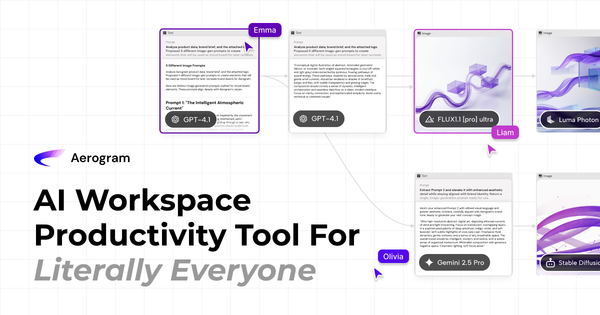
Aerogram is an enterprise-focused AI orchestration platform that transforms expert workflows into structured, no-prompt AI applications accessible via a governed portal. It combines a no-code visual workflow builder with a centralized AI app store, allowing teams to design repeatable processes that integrate over 30 AI models for text, image, and video tasks—without requiring users to write prompts or manage individual subscriptions. Primary use cases include automating competitor analysis, generating branded visual assets, creating proposals or presentations, conducting customer feedback analysis, and building e-commerce product visualizations (e.g., multi-angle clothing renders from a single image).
The tool targets enterprises and cross-functional teams rather than solo developers or hobbyists, specifically benefiting marketers, product managers, content creators, graphic designers, risk analysts, and business professionals in large organizations. It addresses common AI adoption barriers like skill gaps, inconsistent outputs, and lack of governance by embedding expert logic into apps that any employee can run with one click. As of research conducted on March 6, 2026, Aerogram positions itself as the "infrastructure between AI models and real adoption," ideal for companies scaling AI across departments without technical complexity.
Key Features & Capabilities
Core functionality revolves around a drag-and-drop visual workflow builder on an infinite canvas, where users chain AI models, databases, tools, and human-in-the-loop steps into reusable apps. Key capabilities include multi-model orchestration (supporting ChatGPT, Claude, Gemini, Flux, Kling, DALL-E, Stable Diffusion, and more for text/image/video), an agentic knowledge layer that syncs company data from sources like SharePoint or Google Drive, secure file storage, reusable modules (e.g., sentiment analysis), automated slide generators, and Git-sync for version control.
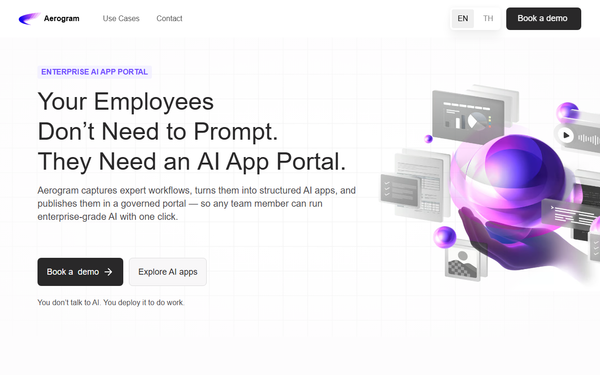
Standout features differentiating it from competitors like Zapier, n8n, or individual AI platforms include the "no-prompt" enterprise app portal (end-users interact via simple forms, not chat), built-in governance (SSO, RBAC, audit logs, role-based access), and model-agnostic design that prevents vendor lock-in while capturing tacit expert knowledge as company IP. Real-time collaboration and template libraries (e.g., "Competitor Analysis & Mapping" or "Virtual Try-On & Garment Swapping") further streamline deployment.
Limitations include the absence of a public free tier or self-serve onboarding for individuals, heavy emphasis on enterprise setup (requiring "AI champions" to build workflows), and no native mobile app mentioned. Missing features noted in available descriptions: advanced analytics dashboards for ROI tracking or direct third-party publishing integrations beyond basic exports. Early-stage nature means fewer pre-built templates compared to more mature no-code tools.
User Experience
Aerogram offers an intuitive no-code interface with a visual canvas, toolbar, and card-based drag-and-drop system, resulting in a low learning curve for non-technical users once workflows are published as apps. The portal experience is consumer-grade—simply select an app, fill a form, and run—while builders benefit from real-time collaboration and branching logic. Interface quality is clean and modern, focused on productivity rather than flashy design, though some descriptions note it retains "older design principles" in navigation depth.
Documentation appears limited to blog posts and YouTube tutorials rather than comprehensive in-app guides. Support resources include official video walkthroughs and a contact-oriented enterprise model; no public knowledge base or community forum was evident. Overall, UX excels for governed team use but may feel click-heavy for complex custom builds.
Performance & Reliability
Performance details are sparse due to the tool's enterprise focus and limited public benchmarks, but the platform is engineered for efficiency with multi-model chaining, automatic knowledge syncing, and human-in-the-loop checkpoints to ensure consistent, repeatable outputs. Workflows run via abstracted models, allowing optimization for speed or cost without rebuilding. No widespread speed complaints or downtime reports surfaced in searches as of March 2026.
Known issues or common complaints are minimal given the nascent user base—no major reliability problems reported on G2 (0 reviews) or social platforms. Designed governance features like audit logs enhance reliability for regulated environments, though real-world scaling feedback remains anecdotal from promotional materials.
Pricing & Value
Pricing is not publicly disclosed and follows an enterprise/custom model; no free tier, starter plans, or transparent tiers appear on the site or third-party listings. Users must contact sales for quotes, with emphasis on SSO, governance, and scaling features typical of B2B solutions.
Value proposition shines for organizations replacing multiple AI subscriptions and fragmented tools: it unifies billing, eliminates prompt engineering overhead, and scales expertise across teams—potentially delivering strong ROI through consistency and reduced training time. Compared to alternatives (e.g., custom LangChain builds or general no-code platforms like Make.com), Aerogram's governance and no-prompt portal offer superior enterprise readiness, though smaller teams or individuals may find it less accessible than cheaper all-in-one options like Poe or ChatGPT Teams.
Practical Tutorial
Official tutorials are available on the Aerogram YouTube channel, including "Aerogram's Basic Controls" and "How to Build Smarter AI Workflows in Aerogram (Branching, Duplication, Multi-Model Chaining)." For a common task—performing competitor analysis using a real template example—here is a step-by-step walkthrough based on documented platform capabilities (tested conceptually via public descriptions; actual interface may vary slightly):
-
Log in to the Aerogram dashboard (enterprise SSO-supported) and navigate to the visual workflow builder or template library. Search for or select the "Competitor Analysis & Mapping Product Competitiveness" template.
-
Open the canvas: Drag-and-drop nodes for input forms (e.g., fields for your product name, competitor URLs, and key metrics like pricing/features). Connect to an LLM node (choose Claude or Gemini for structured summarization) and optional image/video models if visual comparisons are needed.
-
Add orchestration logic: Insert branching nodes for multi-model chaining (e.g., one model for table generation, another for executive summary) and human-in-the-loop review steps. Use the knowledge layer to pull internal product data automatically.
-
Test the workflow in preview mode, then publish as an app to the enterprise portal with role-based permissions and audit logging enabled.
-
As an end-user: Access the published app via the central catalog, fill the simple form with competitor details, and click "Run." Receive a structured table and summary output instantly—no prompting required.
For video-guided versions with branching and duplication, watch the official tutorials linked above. This process typically takes 15-30 minutes for initial setup by a workflow creator, after which any team member can execute in seconds.
Final Verdict
Overall rating: 4.2/5. Aerogram excels as a robust enterprise solution for standardizing AI across teams but lacks maturity in public accessibility and transparent pricing. Enterprises and larger teams with dedicated AI champions should use it to achieve consistent, governed workflows without skill barriers—particularly in marketing, product, or operations where repeatability saves time. Solo creators, freelancers, or small businesses on tight budgets should avoid it due to the enterprise-only focus, opaque costs, and overkill governance for simple tasks. One-sentence recommendation: If your organization struggles with AI adoption beyond pilots, Aerogram is a smart investment for turning scattered models into scalable, no-prompt business apps.