Turn Pantry Staples into Meals with AI Recipe Generator Review
Overview & Purpose
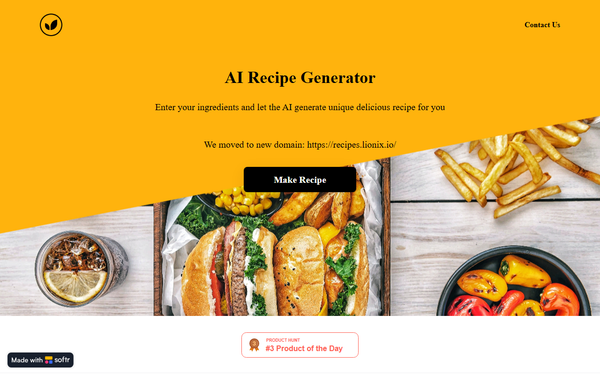
The AI Recipe Generator at https://ai-recipes.softr.app/ is a straightforward web-based tool designed to help users create personalized recipes using ingredients they already have at home. Users sign up with an email account, input available ingredients (and optionally dietary preferences), and the AI generates a unique recipe that is emailed directly to them.
Its primary purpose is to reduce food waste, simplify meal planning, and inspire home cooking by turning pantry staples into complete, ready-to-make dishes. It addresses common pain points like “what can I make with what I have?” without requiring advanced cooking skills or shopping trips.
Target audience includes everyday home cooks, busy professionals, families, and anyone focused on minimizing waste or improvising meals. It is not aimed at developers, marketers, or designers but rather at casual users seeking quick, practical culinary inspiration. Research conducted as of April 2026 shows it as a niche, no-frills utility built on the Softr no-code platform.
Key Features & Capabilities
Core functionality revolves around AI-driven recipe generation from user-supplied ingredients. Enter items like “chicken, rice, broccoli, soy sauce,” specify preferences (e.g., vegetarian or low-carb), and receive a tailored recipe via email—typically in a simple, step-by-step format.
Standout features include its extreme simplicity (often described as a “three-click” process), completely free access, and focus on utilizing on-hand ingredients to promote sustainability. Unlike more complex AI cooking apps, it requires no app download, photo uploads, or extensive customization—just quick input and email delivery.
Differentiators from competitors (such as DishGen, RipePlate, or general tools like ChatGPT) lie in its minimalism and email-based output, which allows users to receive recipes without staying on the site or managing accounts for storage.
Limitations are notable: recipes are delivered only via email (no in-app viewing, saving, or history), there is no mobile app, advanced filtering (cuisine type, cooking time, skill level), nutritional analysis, or image generation. It lacks meal planning, shopping lists, or community features found in dedicated apps. AI-generated recipes can occasionally include unrealistic combinations or inaccuracies common to the category. One reported user issue involved delayed or missing emails.
User Experience
The tool boasts a low learning curve thanks to its minimalist Softr-built interface. Signing up and submitting ingredients is intuitive for anyone familiar with basic web forms. No prior AI or cooking expertise is required.
Interface quality is clean and functional but basic—typical of no-code platforms—prioritizing speed over polish. There are no advanced visualizations, recipe cards, or interactive elements.
Documentation and support resources are minimal or nonexistent on public pages; users rely on the straightforward flow and email confirmation. No official tutorials, help center, or chat support were identified in available sources. Feedback on directories like Product Hunt is sparse but positive (4.7/5 from a small number of reviews).
Performance & Reliability
Recipe generation is fast, with the AI processing inputs quickly before emailing results (often within minutes). Efficiency is high for its intended simple use case—no heavy loading or complex computations visible to the user.
Known issues are limited due to the tool’s niche status and low public visibility. Common AI recipe pitfalls apply (e.g., occasional implausible steps or flavor mismatches), and at least one user reported not receiving the emailed recipe. No widespread complaints or downtime reports surfaced in searches across review platforms or forums as of April 2026. Reliability appears adequate for occasional use but unproven at scale.
Pricing & Value
The AI Recipe Generator is entirely free with no mentioned tiers, limits, or premium upgrades. There are no ads or upsells referenced in official descriptions or directory listings.
Value proposition is strong for budget-conscious users seeking zero-cost pantry-to-recipe conversion. Compared to paid AI cooking apps or general-purpose tools requiring prompts and manual refinement, it offers convenience without any financial commitment. However, more feature-rich alternatives may deliver greater long-term value for frequent cooks who want saved recipes, nutrition info, or images.
Practical Tutorial
No official tutorials or documentation were found on the site or linked resources. Below is a step-by-step walkthrough for the most common task—generating a recipe from pantry ingredients—based on the tool’s documented flow (verified via Product Hunt and directory listings as of April 2026).
- Visit https://ai-recipes.softr.app/ and click the sign-up or get started button.
- Create a free account using your email address (required for recipe delivery).
- On the main interface, enter the ingredients you have on hand in the search/input bar (e.g., “eggs, spinach, cheese, tomatoes, bread”). Optionally note any dietary preferences if the form allows.
- Submit the request. The AI processes the input and sends a unique, customized recipe to your registered email (typically includes ingredients list, instructions, and serving suggestions).
- Check your inbox (including spam/promotions folder if needed) and follow the emailed recipe.
Example: Inputting “chicken thighs, potatoes, garlic, rosemary, olive oil” might yield a simple roasted sheet-pan meal with prep and cooking times. Results vary based on AI interpretation but focus on feasible home-cooking methods. For best outcomes, list 4–8 common ingredients and be specific about quantities or restrictions.
Final Verdict
Overall rating: 7/10. The tool excels at effortless, free recipe ideation for reducing waste but falls short on depth and polish compared to more mature competitors.
Who should use this tool: Home cooks, students, or busy households who want a dead-simple, no-cost way to turn random pantry items into dinner ideas without apps or subscriptions.
Who should avoid this tool: Serious food enthusiasts, meal-preppers, or anyone needing saved libraries, detailed nutrition data, images, or interactive guidance—better options exist with richer features.
One-sentence recommendation: If you’re tired of staring at leftover ingredients and just want a quick emailed recipe idea for free, give AI Recipe Generator a try—it delivers exactly what it promises with zero complexity.