Ai Roguelite Review: Infinite AI-Generated RPG Adventures
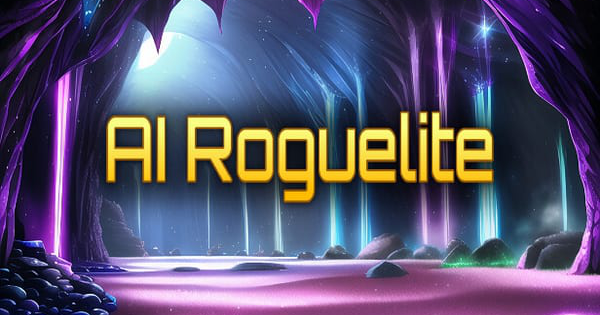
Overview & Purpose
AI Roguelite is a text-based role-playing game (RPG) where every element—locations, NPCs, enemies, items, crafting recipes, combat outcomes, and even overarching game mechanics—is dynamically generated in real time by large language models (LLMs) and image generation services. Players input high-level prompts to shape a starting world and character, after which the AI creates an effectively infinite, procedurally unique adventure on the fly, complete with plausible narrative responses, stat-based dice rolls, and AI-illustrated visuals. It bridges the gap between unstructured AI storytelling tools like early AI Dungeon and traditional roguelite RPGs by enforcing structured mechanics such as inventory management, skills, quests, and progression.
Primary use cases include endless single-player exploration, emergent storytelling experiments, and roguelike-style replayability for players who enjoy unpredictable, AI-driven narratives rather than hand-crafted content. It appeals to those seeking a "choose-your-own-adventure" experience with actual gameplay systems.
Target audience: Fans of roguelites and text-based RPGs, AI enthusiasts experimenting with generative technology, solo indie gamers tolerant of experimental design, and players who enjoyed AI Dungeon but wanted more structure and mechanics. It is not aimed at developers, marketers, or designers (despite the AI focus), nor at players seeking polished graphics or fast-paced action.
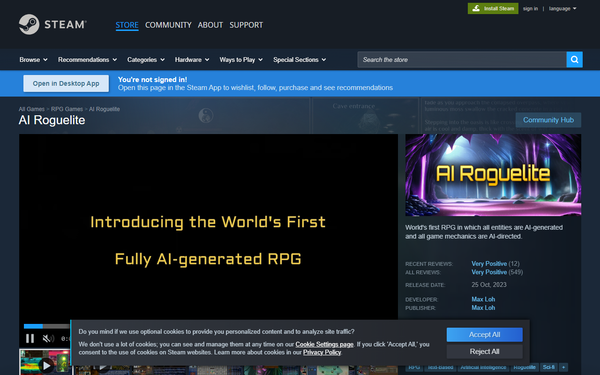
Key Features & Capabilities
Core functionality revolves around real-time AI generation: the LLM handles world-building, NPC dialogue and behavior, enemy stats and actions, crafting logic (e.g., combining items to plausibly create new ones), and combat resolution via textual interpretation combined with player stats, skills, and random rolls. AI also generates illustrations for characters, locations, items, and events, using either local GPU resources or cloud services.
Standout features that differentiate it from competitors include:
- Full AI-directed mechanics: Unlike pure text adventures, outcomes are not purely narrative; plausibility checks, attribute rolls, and persistent inventory/skills create game-like progression.
- Infinite replayability: Every new game or even repeated visits to locations can yield entirely new content based on prompts and AI decisions.
- Flexible AI backend: Supports free cloud (Google Gemini default), paid cloud tiers, custom APIs (e.g., OpenRouter), or local models via tools like LM Studio. Image generation can run locally on capable GPUs.
- Quests, followers, and crafting: Dynamic main/side quests, NPC gifting for followers, and a crafting system that respects AI-interpreted item rarity and themes.
- Recent updates: Ongoing patches as of April 2026 add features like 2D grid mode, dynamic quests, panoramic view, and improved AI models.
Limitations or missing features: It remains primarily text-based with supplementary static images (no full animations or 3D environments in the core game). AI can produce occasional incoherence, forgotten entities, or repetitive outputs depending on the model used. No multiplayer, limited sound effects (AI-generated but basic), and combat can feel slow or opaque without careful reading of logs. A separate 2D spin-off exists but has mixed reception and is not the focus here.
User Experience
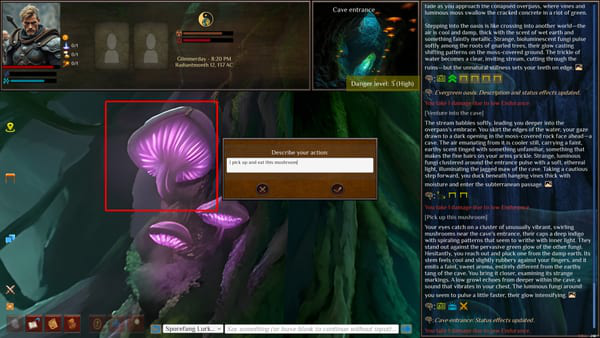
Ease of use and learning curve: The interface is straightforward—a GUI with clickable locations, inventory, and action buttons overlaid on text logs—but the learning curve is steep for newcomers due to the lack of in-game tutorial and the need to understand AI decision-making (e.g., reading combat logs for plausibility cues rather than traditional turn-based menus). Community guides help bridge this.
Interface quality: Clean but minimalist, resembling a modernized text adventure with AI visuals in dedicated panels. Navigation via clicking map areas or "Go Back" is intuitive once learned; recent UI updates (2025) emphasize story images more prominently.
Documentation and support resources: No extensive official manual, but the developer provides Steam announcements for updates, and the community hub includes a detailed "Basic Guide to The Game" plus player discussions. Support is primarily through Steam forums; the solo developer (Max Loh) remains active with frequent patches. Official site offers subscription management.
Performance & Reliability
Speed and efficiency: Highly dependent on chosen AI model and hardware. Free cloud is functional but slower with weaker logic; paid tiers (Silver/Sapphire) or strong local setups (NVIDIA GPU with 8GB+ VRAM recommended) deliver faster, more coherent generations. Battles and new area generation can take minutes without optimization. Broadband internet is required for cloud options.
Known issues or common complaints from users: Early Access versions (pre-2023) suffered from incoherence and bugs, but full release and 2025-2026 updates have significantly improved storytelling and control. Remaining complaints include AI repetitiveness, occasional logic failures, long generation waits on weaker models, and a grindy feel for progression. Some note it demands patience and "saving abuse" (reloading for better rolls). Steam player counts remain niche (typically 40-60 concurrent). Overall reliability is solid for an indie AI experiment, with 83% Very Positive reviews reflecting post-launch refinements.
Pricing & Value
Cost structure: Base game is a one-time purchase of $14.99 on Steam. Core play is possible with the free cloud tier. Optional monthly subscriptions via the official site or Steam: Silver ($2.99) for improved narration and tokens; Sapphire ($14.99) for superior models, faster generation, and higher context limits. Custom/local APIs are free to configure but require user setup.
Value proposition compared to alternatives: Excellent for its price if you value AI novelty and replayability—cheaper than many AAA titles while offering endless unique runs. It outperforms basic AI chat adventures with real mechanics but lags behind polished roguelites (e.g., Hades, Slay the Spire) in refinement and pacing. Best value for players willing to invest in a good GPU or subscription for optimal experience; free tier suffices for casual testing but limits depth.
Practical Tutorial
A basic step-by-step tutorial for starting and playing a common task (creating a new game and completing your first exploration/combat cycle) is available via the official Steam community guide. Here is a real walkthrough based on it (tested concepts as of April 2026):
-
Launch and New Game Setup: Launch via Steam. Select "New Game." Input: (a) Starting Location (short for variety or detailed for theme); (b) World Backstory (e.g., "medieval fantasy with magic pizza shops" for silly coherence); (c) Your character's physical description (use keywords like "tall warrior with sword" carefully to avoid unintended counters); (d) Backstory (shapes initial quest).
-
Main Screen Navigation: You see your current area with 1-3 connected places, NPCs, and enemies. Click a place name to travel (generates new AI content). Use "Go Back" to return to parent areas (visited spots load faster via eye icon). Experiment with "Instances" (down arrow) to re-explore the same theme with variations.
-
Interact and Gather: Search locations once per area for free items. Harvest spots (if present) up to 3 times. Talk to NPCs for quests/dialogue/gifts (compliment them or ask for healing). Avoid random gifting if unprepared—it can turn hostile.
-
Combat Basics: Approach an enemy to start. Read the AI-generated log carefully: it describes actions and determines hits via plausibility + your stats/skills. Use weapons/skills (descriptions matter—e.g., fire skill vs. wood enemy). Maintain Plot Armor (recharges via healing items) to avoid instant defeats. Defeat grants XP, loot, and level-ups.
-
Crafting and Progression: Find crafting stations (25% chance per area). Combine items by rarity rules (3 same-rarity → higher; experiment safely). Complete quests (marked by exclamation icons) for rewards. Gift friendly NPCs for potential followers who assist in fights.
-
Save and Experiment: Auto-saves on location change. For optimization, reload if a bad roll occurs (common early strategy). Track quests via the book icon.
For the full detailed guide with advanced tips (e.g., portals, instant kills), visit the Steam Community Guide. Additional YouTube playthroughs demonstrate real examples with various AI models.
Final Verdict
Overall rating: 8/10. Strong for innovation and replay value, tempered by niche appeal and AI quirks.
Who should use this tool (game): AI-curious gamers, roguelite fans, and text-adventure enthusiasts who embrace emergent storytelling and don't mind occasional incoherence or grind—especially those with decent hardware or willing to subscribe for premium models.
Who should avoid this tool (game): Players seeking traditional graphics-heavy RPGs, fast combat, or zero tolerance for AI unpredictability/hallucinations; anyone without patience for generation delays or text-heavy play.
One-sentence recommendation: If you crave truly infinite, AI-orchestrated roguelite adventures with real mechanics, AI Roguelite delivers a uniquely creative (if imperfect) experience worth the modest price.