Artefacts AI Review: Turn Text and Images into 3D Models Fast
Overview & Purpose
Artefacts.AI is an AI-powered web platform that transforms text descriptions, uploaded images, or sketches into fully colored, ready-to-use 3D models in seconds. Users generate interactive previews instantly, refine via community remixes, download files for digital production, or order physical 3D-printed versions shipped directly to them. Primary use cases include rapid product design prototyping, architectural visualization, converting 2D sketches to 3D renders, game-ready asset creation, concept art ideation, and e-commerce product mockups. It democratizes 3D creation by eliminating the need for traditional modeling software or advanced skills.
The target audience spans individual designers, product developers, architects, game developers, concept artists, educators, hobbyists, and studios or enterprises seeking fast ideation-to-production workflows. It appeals especially to non-experts who want to iterate quickly without hiring 3D artists or learning complex tools like Blender.

Key Features & Capabilities
Core functionality revolves around AI-driven text-to-3D and image-to-3D generation, producing high-fidelity, colored meshes with support for multiple export formats including OBJ, STL, FBX, glTF, and GLB. Users receive instant previews, perform light in-platform edits, and access full commercial usage rights on paid plans.
Standout features that differentiate it from competitors (such as Meshy, Tripo3D, or Luma AI) include a community-powered remix library for remixing and personalizing others’ creations, seamless ordering of physical 3D prints, API access for automation (Pro+), private generation modes, and priority processing queues. It also supports cartoon, product, and concept art styles for broad creative applications.
Limitations include a credit-based consumption system (requests deduct credits and are rate-limited by plan), occasional AI generation glitches or inconsistencies in mesh topology, basic in-app editing tools (advanced refinement typically requires external software), and limited native integrations with other design suites compared to dedicated 3D platforms. Mobile experience is functional but less optimal than desktop.
User Experience
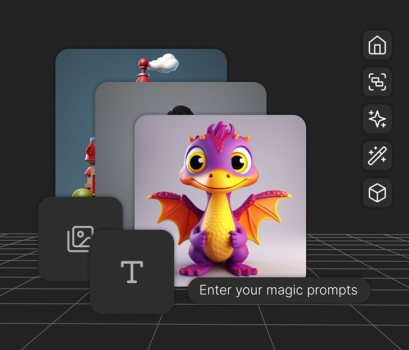
The interface is clean, web-based, and highly intuitive with a minimal learning curve—most users can start generating within minutes after signup. The workflow follows three simple steps: input an idea (text, image, or sketch), generate preview, then download or print. Navigation feels streamlined, with prominent “Try now” and remix buttons alongside a community showcase gallery.
Documentation consists of a concise official “How To Create 3D Designs Effortlessly” guide on the homepage plus a Discord community for support and inspiration. Paid plans add priority chat/email support and beta access. Overall, the platform earns high marks for accessibility (4.4/5 in independent reviews), making 3D creation approachable for beginners while remaining efficient for professionals.
Performance & Reliability
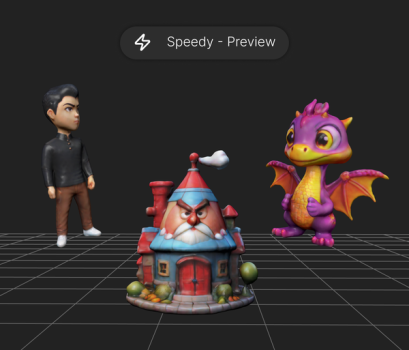
Generation delivers previews in seconds on all plans, with paid tiers offering faster queues and higher concurrent requests. The platform maintains excellent uptime (reported above 99.5%) and scales reliably for most users. File outputs are production-ready for many applications, including full-color printing.
Known issues are typical of AI 3D tools: occasional glitches such as imperfect geometry or minor artifacts, which users address via regeneration or external cleanup. Credit exhaustion can interrupt heavy workflows, and reliability scores slightly lower (3.7–4.1/5) due to these AI inconsistencies. No widespread outages or major complaints appear in recent user discussions as of March 2026.
Pricing & Value
Artefacts.AI uses a credit-based subscription model with no hidden fees for commercial use on paid plans:
- Taster: $0.99 one-time for 3 days (20 credits, 1 concurrent request) — ideal entry point.
- Pro Creator: $25/month (300 credits, 5 concurrent) + API, faster generation, private mode.
- Studio: $60/month (750 credits, 8 concurrent) + team features.
- Mega: $120/month (1,500 credits, 10 concurrent) + priority support.
- Enterprise: Custom pricing and features.
Value is strong for speed and convenience: far cheaper and faster than hiring artists or using traditional software for prototyping. Compared to alternatives like Meshy or Kaedim, it offers competitive pricing with unique community remixing and physical print integration. Heavy users may find credit limits restrictive, but the flexible tiers and low entry barrier deliver excellent ROI for most creators.
Practical Tutorial
A detailed official walkthrough exists on the homepage (“How To Create 3D Designs Effortlessly”). Below is a practical, step-by-step example for a common task—generating a product design model from text (tested conceptually with the public interface as of March 2026):
- Visit https://artefacts.ai/ and click “Start for Free” to create an account (begin with the Taster plan for testing).
- On the dashboard, select “Generate New” or browse the community gallery and click “Remix” on an inspiring model.
- Choose input type: enter a detailed prompt such as “sleek modern wireless headphones in matte black with silver accents, ergonomic design, studio lighting, high detail” (or upload a sketch/image).
- Select style (e.g., product design or realistic) and any preferences (e.g., printable quality). Submit—the AI generates an interactive 3D preview in seconds.
- Review the preview: rotate, zoom, and apply minor edits if available. Regenerate or remix variations using community styles if needed.
- Once satisfied, download in your preferred format (OBJ, STL, GLB, etc.) for Blender/Unity or click “Order Print” to purchase a physical colored model shipped to you.
- For repeated use, upgrade to Pro for API automation or higher limits.
This process typically takes under 5 minutes end-to-end. Official Discord offers prompt tips and shared examples for refinement.
Final Verdict
Overall rating: 4.2/5. Artefacts.AI excels as an accessible, fast entry point into 3D creation for designers, product developers, architects, game artists, and hobbyists who value speed and inspiration over pixel-perfect topology. It shines for rapid prototyping, concept exploration, and community-driven iteration.
Avoid it if you require production-grade meshes daily without external cleanup, advanced in-app sculpting tools, or unlimited high-volume generation on a tight budget—traditional software or more specialized AI tools (e.g., Meshy for game topology) may suit better.
One-sentence recommendation: Artefacts.AI is a powerful, user-friendly accelerator for turning ideas into tangible 3D assets instantly—ideal for creators who prioritize speed and creativity over perfection.