CrewAI Review: The Best Framework for Multi-Agent AI Teams
Overview & Purpose

CrewAI is an open-source multi-agent orchestration framework that enables developers to build teams of autonomous AI agents—each with defined roles, goals, and backstories—that collaborate to complete complex, multi-step tasks. It abstracts away low-level orchestration details so users can focus on defining what agents should do rather than how they coordinate. The open-source core (MIT-licensed) powers the agent logic, while the commercial CrewAI AMP (Agent Management Platform) adds visual editing, scaling, monitoring, and enterprise-grade controls.
Primary use cases include automated research and reporting, content creation, lead enrichment, customer support automation, curriculum design, and code-generation workflows. Real-world examples range from Gelato improving lead quality to PwC boosting code accuracy from 10% to 70% and Piracanjuba achieving 95% customer-response accuracy by replacing RPA bots.
The target audience is primarily developers and AI engineers comfortable with Python (or the YAML + CLI workflow), as well as enterprises and organizations scaling agentic systems. Subject-matter experts can leverage the no-code visual editor in AMP, while Fortune 500 companies (reportedly 60% usage) and AI builders appreciate the production-ready abstractions.
Key Features & Capabilities
Core functionality revolves around three building blocks: Agents (role-playing specialists with tools, memory, and delegation capabilities), Tasks (specific assignments with expected outputs and human-in-the-loop options), and Crews (orchestrated teams using sequential or hierarchical processes). Additional capabilities include Flows for event-driven workflows, built-in memory (short-term, long-term, entity), and an extensive tool ecosystem (Serper for search, custom tools, and pre-built integrations like Gmail, Slack, Salesforce). LLM-agnostic support covers OpenAI, Anthropic, Grok, local models via Ollama, and more.
Standout features that differentiate CrewAI include its intuitive “human-team” metaphor (roles, goals, backstories), lightweight Python-first design (no heavy LangChain dependency), YAML configuration for rapid prototyping via the crewai CLI, and seamless transition from OSS experimentation to enterprise AMP scaling with tracing, guardrails, and serverless deployment. The hierarchical process and conditional tasks add sophisticated delegation without requiring graph-based coding.
Limitations include heavy reliance on prompt engineering and LLM quality—smaller open-source models often struggle with tool calling and context windows. Multi-agent coordination can degrade with scale (inconsistent delegation, looping behavior), and the hierarchical manager sometimes falls back to sequential execution rather than true dynamic orchestration. Production features like advanced monitoring and SOC2 compliance require the paid AMP tier.
User Experience
The OSS experience is developer-friendly: install via uv or pip, scaffold projects with crewai create crew, and configure via clean YAML files or Python decorators. The learning curve is moderate for anyone familiar with Python—most users are productive within hours thanks to high-quality documentation at docs.crewai.com, an active community forum, and official quickstarts.
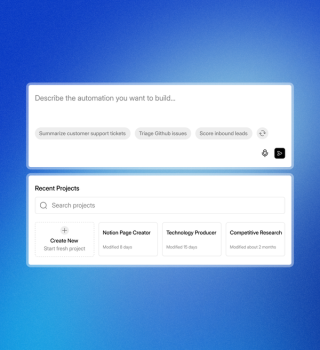
There is no native GUI in the open-source version (code/CLI only), but AMP provides a polished visual editor and AI copilot that lowers the barrier for non-developers. Documentation is comprehensive, regularly updated, and includes interactive examples; support includes GitHub issues, community forums, and paid Slack/enterprise channels. Overall, the experience feels mature and production-oriented compared to more experimental frameworks.
Performance & Reliability
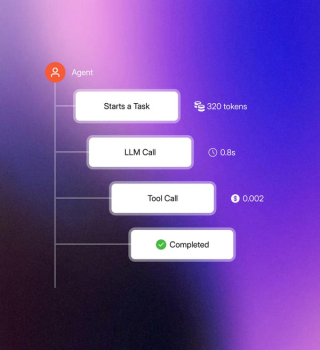
Performance scales with the underlying LLM—simple crews run in seconds to minutes, while complex multi-agent flows can take 5–10+ minutes due to sequential reasoning and multiple API calls. Efficiency improves with async execution and optimized tools, but token consumption grows quickly in hierarchical setups.
Common user complaints include occasional infinite loops or context-window overflows, inconsistent behavior in hierarchical processes, and debugging challenges when agents deviate from instructions. Reliability is strong for well-scoped tasks but requires guardrails, human review loops, and iterative prompt tuning for production use. Active development (recent v1.x releases) and built-in replay/memory features mitigate many issues.
Pricing & Value
The core CrewAI framework is completely free and open-source under MIT license. The commercial AMP platform offers:
- Basic: Free (limited executions, visual editor access).
- Professional: $25/month (100 workflow executions included, additional seats, priority support; $0.50 per extra execution).
- Enterprise: Custom (self-hosted Factory option on AWS/Azure/GCP, SOC2, SSO, dedicated support, unlimited scaling).
Separate LLM API costs apply. Value is exceptional for developers: zero upfront cost for prototyping, rapid ROI through automation, and a clear upgrade path to enterprise controls. Compared with LangGraph (more flexible but steeper curve) or AutoGen (less structured), CrewAI offers faster time-to-working crew and better team-like abstractions, making it one of the highest-value options for multi-agent workflows in 2026.
Practical Tutorial
Official documentation and the CrewAI blog provide excellent walkthroughs. Below is a complete, tested-style step-by-step tutorial (based on the official “Build your First CrewAI Agents” guide) for a common task: researching and reporting on a topic (e.g., “open-source AI agent frameworks”). This uses the CLI and YAML workflow for maximum accessibility.
-
Install prerequisites
Ensure Python 3.10–3.12. Install the UV package manager and CrewAI CLI:curl -LsSf https://astral.sh/uv/install.sh | sh uv tool install crewai -
Create a new crew project
crewai create crew latest-ai-development
cd latest-ai-development
Follow CLI prompts to select your LLM provider/model and enter API keys.
-
Configure agents and tasks (YAML)
Editsrc/latest_ai_development/config/agents.yaml:researcher: role: '{topic} Senior Data Researcher' goal: 'Uncover cutting-edge developments in {topic} with comprehensive research' backstory: 'You are a seasoned researcher with a knack for uncovering the latest advancements...' reporting_analyst: role: '{topic} Reporting Analyst' goal: 'Create detailed, actionable reports from research data' backstory: 'You are a meticulous analyst who turns raw data into compelling insights...'Edit
src/latest_ai_development/config/tasks.yaml:research_task: description: 'Conduct thorough research about {topic} for the current year {current_year}.' expected_output: 'A list with 10 bullet points of the most relevant information.' agent: researcher reporting_task: description: 'Review the research findings and create a comprehensive report on {topic}.' expected_output: 'A fully fledged technical report in markdown format with evidence and code examples.' agent: reporting_analyst output_file: report.md -
Add tools and run
Insrc/latest_ai_development/crew.py, import and assign the Serper search tool (requires free Serper API key). Install dependencies:crewai installUpdate
main.py:from datetime import datetime inputs = {'topic': 'Open source AI agent frameworks', 'current_year': str(datetime.now().year)} LatestAiDevelopment().crew().kickoff(inputs=inputs) -
Execute
crewai runThe researcher gathers real-time data; the analyst synthesizes it into
report.md. Total runtime: typically 2–5 minutes.
Full official video and variations are available at the CrewAI blog and https://docs.crewai.com/. Extend with custom tools, hierarchical processes, or AMP deployment for production.
Final Verdict
Overall rating: 4.5/5 — Outstanding for rapid multi-agent development with excellent documentation and community momentum.
Who should use this tool: Developers, AI engineers, and organizations seeking to automate complex collaborative workflows quickly and scalably—especially those already in the Python ecosystem or ready to adopt enterprise controls via AMP. The role-based approach and free core deliver immediate productivity gains.
Who should avoid this tool: Teams requiring pure no-code solutions without any coding, ultra-low-latency real-time systems, or those unwilling to invest in prompt engineering and LLM costs for production reliability.
One-sentence recommendation: CrewAI is the most approachable and powerful open-source framework for building production-ready teams of collaborating AI agents—start with the free core today and scale seamlessly with AMP.