Dumme Review: Transform Long Videos into Viral Shorts with AI

Overview & Purpose
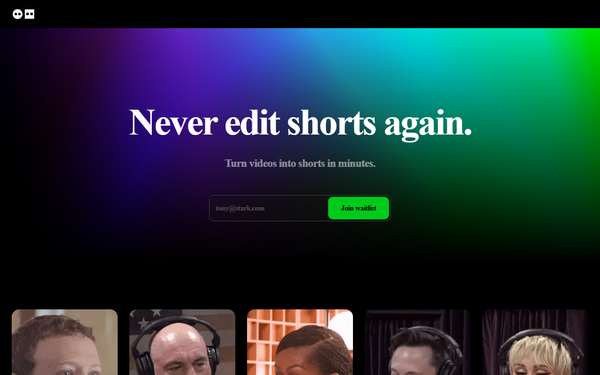
Dumme is an AI-powered short video generator designed to transform long-form videos or podcasts of any length and content type into ready-to-upload shorts. It automatically identifies clip-worthy moments while preserving the original context, structure, narrative flow, hooks, and natural endings—mimicking human editorial decisions. The tool then adds optimized captions, titles, and descriptions tailored for algorithmic performance across social platforms like YouTube Shorts, TikTok, Instagram Reels, and others. Users can import content from YouTube, Spotify, Twitter/X, or upload files directly, with no YouTube account required. It supports over 20 languages and excels with speech-focused content such as podcasts, lectures, interviews, and webinars.
Primary use cases include repurposing existing long-form content libraries for short-form social media distribution, saving creators hours of manual editing, and expanding audience reach through viral-ready clips. The target audience is primarily content creators, podcasters, YouTubers, educators, and marketers who produce or own speech-heavy long-form videos and seek efficient ways to repurpose them without advanced editing skills. It is not aimed at developers, designers, or those creating original short-form content from scratch.
Key Features & Capabilities
Core functionality revolves around AI-driven highlight detection, clip generation (typically 8-12 shorts from a 20-minute video, scaling with length), automatic captioning, title/description optimization, and one-click export or direct upload to platforms. The AI is trained on thousands of hours of video to ensure clips feel natural and contextually coherent rather than just viral snippets.
Standout features differentiating it from competitors (such as Opus Clip, Munch, or Klap) include strong emphasis on narrative preservation and context awareness, multi-source import without platform logins, broad language support, and end-to-end readiness for upload—no additional editing software needed. Early demos highlight processing times of around 20 minutes for a one-hour video, with initial clips available after about five minutes.
Limitations and missing features: As of April 11, 2026, Dumme remains primarily accessible via a persistent waitlist (with some beta/early access for select users), limiting widespread testing. Publicly available information on advanced editing controls, custom branding options, analytics integration, or batch processing for large libraries is sparse. No native support for non-speech content (e.g., action-heavy videos) is emphasized, and real-time collaboration or team features are not highlighted in official materials.

User Experience
Ease of use appears high based on official descriptions and available YouTube demos: the workflow is streamlined into three steps—import video/podcast, let AI process highlights, and select/export ready shorts with captions. The interface is described as intuitive with a left-side menu for project creation and simple toggle options for captions. Learning curve is minimal for anyone familiar with basic video upload tools, making it accessible for non-technical creators.
Interface quality is praised in early coverage for its clean, modern design focused on speed rather than complex timelines. However, due to limited public access, comprehensive hands-on reviews of polish, mobile support, or dark mode are unavailable. Documentation and support resources are minimal on the public site; users rely on the waitlist form, basic FAQ sections explaining AI capabilities, and occasional community mentions. No extensive help center, video tutorials on the official site, or live chat support is evident—early users appear to get guidance via email or Discord in beta phases.
Performance & Reliability
Speed and efficiency are strong per pre-launch claims and 2023 demos: an hour-long podcast processes in roughly 20 minutes total, with progressive delivery of clips. The AI reliably handles context preservation better than simpler keyword-based tools, producing shorts that stand alone effectively.
Known issues or common complaints: Public user feedback remains limited due to waitlist status, with only a handful of early reviews averaging around 3.0/5 based on claims rather than full use. No widespread reports of reliability problems like inaccurate transcription, poor caption timing, or export failures exist yet. Some third-party analyses note the lack of transparent performance metrics (e.g., clip success rates on algorithms) as a gap. Occasional mentions of inconsistent access during onboarding appear in 2026 comparisons.
Pricing & Value
Pricing details are not publicly disclosed on the official site as of April 11, 2026, and remain a "mystery" according to recent independent reviews. Early 2023 planning referenced a potential $0.40 per minute of processed video or capped monthly subscriptions for smaller creators (e.g., 10 hours/month), with free access during beta testing. Some directory listings mention a free tier for trial purposes, but this is unverified and inconsistent across sources. Enterprise options are not detailed.
Value proposition: For creators with extensive back catalogs, the time savings and context-aware output could deliver high ROI compared to manual editing or less sophisticated tools. However, without transparent pricing or full public access, direct comparisons to available alternatives (many with clear $9–$49/month plans) are challenging. It positions itself as premium for narrative-focused repurposing but may not yet compete on proven cost-effectiveness.
Practical Tutorial
A full official tutorial library is not publicly available due to the tool's pre-launch status, but the core workflow is well-documented on the homepage and demonstrated in third-party YouTube videos from early access users. Here is a step-by-step walkthrough for the common task of generating shorts from a long-form podcast (based on official "How it Works" and demo observations):
-
Gain Access and Sign In: Join the waitlist at dumme.com or request early access via the Typeform link. Once invited (or in beta), sign in to the dashboard.
-
Create a New Project: From the left-side menu, click the green "Create Project" button.
-
Import Your Content: Paste a link from YouTube, Spotify, Twitter/X, or any source, or upload a video file directly. No YouTube account login is required.
-
Let AI Process: Dumme's models automatically scan for clip-worthy moments (optimizing hooks, narrative, and endings). For a 1-hour video, expect ~20 minutes total processing, with clips starting to appear after ~5 minutes. Toggle caption generation on/off if desired.
-
Review and Customize: Browse generated shorts (under 60 seconds by default). Select keepers, review/edit auto-generated captions, titles, and descriptions for platform optimization.
-
Export or Upload: Download files or upload directly to social platforms from within Dumme. Shorts are ready with subtitles and metadata.
For visual guidance, search YouTube for demos like "Use THIS AI: Master Short Content! | Dumme" which shows the exact interface in action. Official process is summarized at https://dumme.com/.
Final Verdict
Overall rating: 3.5/5 (potential is high based on claims and early demos, but limited by availability and transparency as of April 11, 2026 research).
Who should use this tool: Podcasters, YouTubers, and long-form content creators with speech-heavy libraries who want automated, context-preserving repurposing to boost social reach—especially those patient enough for waitlist access and seeking human-like results without editing skills.
Who should avoid this tool: Creators needing immediate, fully public access, transparent pricing, or advanced customization; those with non-speech content; or anyone preferring battle-tested alternatives with active user communities today.
One-sentence recommendation: Dumme offers a compelling vision for effortless long-to-short video transformation with strong context intelligence, but creators should monitor for full public launch or explore established competitors in the meantime.