FakeYou Review: Create Realistic Celebrity AI Voiceovers

Overview & Purpose
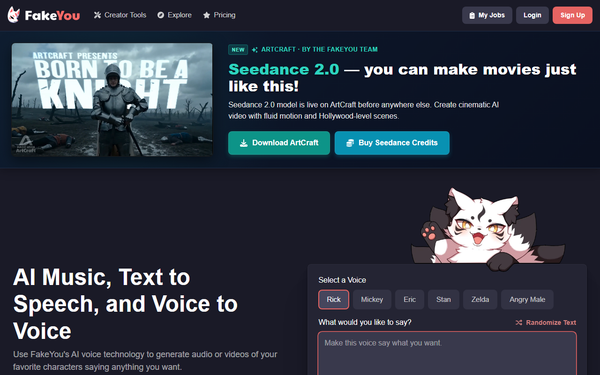
FakeYou (https://fakeyou.com/) is a web-based AI platform that uses deepfake-style technology to generate realistic text-to-speech (TTS) audio clips in the voices of celebrities, fictional characters, and community-created models. Users type text and select from thousands of voices—ranging from actors like Arnold Schwarzenegger or Judi Dench to anime characters like Goku or cartoon icons—to produce custom audio narrations, memes, or social media content. Primary use cases include creating entertaining voiceovers for videos, audiobooks, shopping lists narrated by famous figures, or trend-driven social media clips. It also supports voice-to-voice conversion, custom voice design, and AI-powered lip-sync for video animation, enabling users to animate faces or characters to match generated speech.
The target audience is primarily casual users, hobbyists, content creators, and fans seeking fun or creative applications rather than professional-grade voiceovers. It appeals to marketers experimenting with viral content, social media enthusiasts, and amateur filmmakers, but is less suited for developers or enterprises needing studio-quality consistency (though a limited API exists for integration). As of April 2026, it claims over 10 million users worldwide, positioning itself as an accessible entry point into AI voice generation and deepfake creativity.
Key Features & Capabilities
Core functionality revolves around Text-to-Speech generation, where users select a voice model and input text for instant (or queued) audio output. Additional tools include Voice-to-Voice conversion (transform existing audio into another voice), Voice Designer for creating or refining custom models, model uploads for community sharing, and AI Lip Sync for animating images or videos to match audio.
Standout features differentiating it from competitors like ElevenLabs or Respeecher include its massive, community-driven library of over 3,500 voices (celebrities, memes, anime, and user uploads), integrated video lip-sync tools, and a vibrant community section with leaderboards, patron feeds, and Discord support. The platform emphasizes accessibility and experimentation, with features like ArtCraft for cinematic AI video generation.
Limitations include variable audio quality (some models sound highly realistic, others robotic or glitchy, especially in longer clips), minimal controls for pitch, emotion, or pacing, and occasional legal ambiguities around commercial use of celebrity voices. It lacks advanced studio features like multi-speaker dialogue or fine-grained prosody editing found in premium alternatives.

User Experience
FakeYou features a clean, straightforward web interface with minimal learning curve—users simply browse voices by category/language/rating, type text, and generate audio. Navigation includes sections for Speech Generation, Explore voices, Community, My Jobs, and Creator Tools. No advanced technical knowledge is required, making it highly approachable for beginners.
Interface quality is functional and mobile-friendly but basic, with clear dropdowns for voice selection and a simple "Speak" button. Documentation includes an official TTS Guide with practical tips (e.g., using punctuation for better pronunciation or experimenting with spellings). Support resources are community-focused (Discord, leaderboards) rather than extensive helpdesks; paid users get priority, but overall customer support receives mixed feedback.
Performance & Reliability
Generation speed varies significantly by tier: free users often face queues of 5–15+ minutes during peak times, while paid plans deliver near-instant results with processing priority. Audio output is generally efficient for short clips (up to 2 minutes on top tiers), and lip-sync processing is reasonably fast on premium.
Known issues include inconsistent voice quality across models, occasional site glitches or downtime (reported on Reddit), and longer-form audio that can sound unnatural or babble without proper text formatting. User complaints on Trustpilot and forums highlight queue delays, variable reliability, and rare crashes, though popular voices perform reliably for casual use.
Pricing & Value
FakeYou offers a generous free tier with basic access, short clips, and queues (no account required for testing). Paid plans include:
- Plus ($12/month): Normal priority, up to 30-second TTS clips.
- Pro ($25/month): Faster processing, up to 1-minute clips, private models.
- Elite ($40/month): Fastest priority, up to 2-minute TTS, unlimited voice-to-voice, commercial-friendly options.
Yearly discounts are available. Value is strong for casual/entertainment users due to the unmatched voice variety and low entry cost compared to pro-focused tools. However, professionals may find better ROI in alternatives with consistent quality. Free tier suits light users; paid tiers justify the expense for frequent creators by eliminating waits and unlocking longer/higher-quality outputs.
Practical Tutorial
FakeYou provides an official TTS Guide at https://fakeyou.com/guide with best practices. Here is a step-by-step walkthrough for generating a basic TTS audio clip (e.g., having David Attenborough narrate a short nature fact), based on official and user guides as of April 2026:
- Visit https://fakeyou.com/ and sign up/login (free account recommended for saving jobs).
- Navigate to the Text to Speech section (or use the homepage generator).
- Use filters or search to select a voice: e.g., browse "Celebrities" or "English" category, then choose "David Attenborough" (sort by rating for best models). Over 3,500 options are available.
- Type or paste your text in the input box, e.g., "The great barrier reef is one of the world's most incredible natural wonders." Add punctuation or commas for natural pauses if needed.
- Click Speak or Generate. The job queues (wait time depends on your tier).
- Once processed, preview the audio, then download the MP3/WAV file or share directly.
- For lip-sync: After generating audio, go to the Lip Sync or Video tool, upload a video/image template, select your audio, and process for an animated result.
Experiment with the guide's tips for optimal results, such as ending sentences with periods or tweaking spellings for tricky pronunciations.
Final Verdict
Overall rating: 7.5/10 – Excellent for fun and creativity, but held back by quality variability and free-tier limitations.
This tool is ideal for casual creators, meme makers, social media enthusiasts, and hobbyists who want quick access to a vast library of character and celebrity voices without complexity. It shines in entertainment, viral content, and light video projects due to its community features and lip-sync capabilities.
Avoid it if you need professional, consistent studio-quality audio, advanced customization, or commercial reliability—opt for premium TTS services instead. Legal risks with unlicensed celebrity voices are another consideration for business use.
One-sentence recommendation: FakeYou is a delightful, community-powered playground for turning text into celebrity or character voices—perfect for casual fun, but not a replacement for high-end production tools.