Gatsbi Review: The Ultimate AI Tool for Research Automation
Overview & Purpose

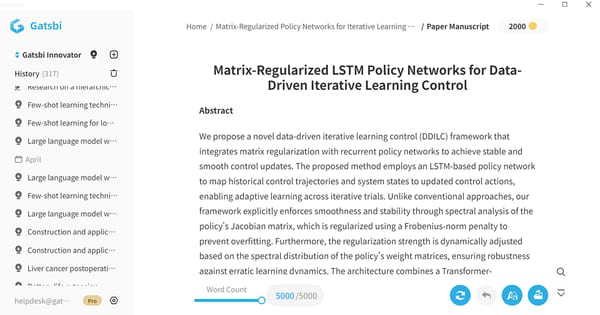
Gatsbi is an advanced AI-powered research automation platform that functions as an intelligent "co-scientist" to handle the full research lifecycle. It detects literature gaps, generates original research ideas and hypotheses with originality scores, drafts complete scholarly papers (including equations, figures, tables, in-text citations, and formatted references), automates systematic literature reviews and meta-analyses with statistical synthesis and publication-ready plots, and creates detailed patent disclosure documents in 11 languages complete with background surveys, novelty analyses, drawings, embodiments, and claims. Primary use cases include accelerating academic paper writing for publication in venues like EI Compendex, SCI, or SSCI; streamlining patent filings for engineers and inventors; and conducting evidence-based systematic reviews or meta-analyses for researchers facing tight deadlines. The platform employs a multi-LLM agentic workflow (orchestrating models such as variants of ChatGPT, Qwen, DeepSeek, and Llama) along with specialized agents—Gatsbi Innovator, Writer, and Reviewer—plus a built-in Deep Research Agent for autonomous evidence collection. It is available primarily as a desktop application (Windows/macOS) with local storage for privacy, and a web version for Pro users. As of March 2026, it serves over 100,000 users across 150+ countries.
Target audience includes academic researchers, PhD students, engineers in fields like AI, XR, and mechanical design, graduate students working on theses or projects, enterprise R&D teams, startups focused on innovation, and legal professionals handling patent documentation. It is explicitly positioned as a productivity booster rather than a replacement for human expertise or actual experimentation.
Key Features & Capabilities
Core functionality revolves around three integrated agents: the Innovator for generating 10–20 creative ideas with gap analysis, feasibility scores, and references; the Writer for one-click production of full manuscripts (up to ~5,000 words) across methodological, experimental, case-study, or mixed-methods formats; and the Reviewer for end-to-end SLR/meta-analysis automation, including study screening, data extraction, synthesis, heterogeneity calculations, and visual outputs like forest or funnel plots. Standout differentiators include the Deep Research Agent for real-time web-based evidence synthesis (introduced in Gatsbi 3.0), automatic generation of publication-quality figures/tables/equations, multi-language patent drafting with technical drawings, a Humanizer plugin to produce more natural-sounding text and reduce AI-detection flags, and flexible exports to Word, LaTeX, or Markdown while preserving formatting. The platform emphasizes originality scoring, compliance with academic standards, and privacy via local desktop processing (no activity logging for Pro users).
Compared to competitors like Paperpal, SciSpace, or general LLMs such as ChatGPT, Gatsbi’s agentic multi-model orchestration and full end-to-end workflow—from ideation through publishable output—provide a more seamless, specialized experience tailored to scientific and engineering innovation rather than generic writing assistance. Limitations include the need for users to verify all generated content for factual accuracy, feasibility, and experimental validity (the tool explicitly warns against academic misconduct and does not perform real-world experiments); occasional surface-level analysis in complex domains; AI-generated outputs that remain detectable by leading detectors; and reliance on third-party models (e.g., OpenAI) for queries, which may incur separate costs in some usage scenarios. Some advanced features, such as unlimited SLR generation, were noted as promotional in early 2026 reviews.
User Experience
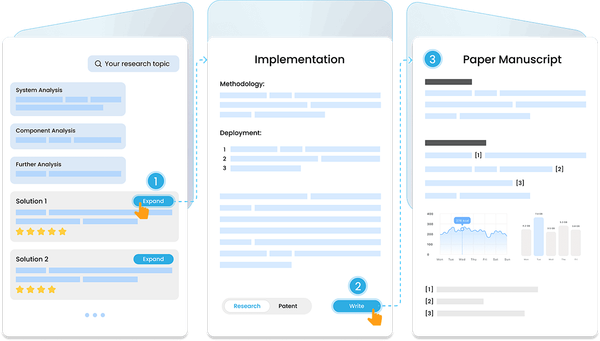
Gatsbi offers a low learning curve with a straightforward three-step workflow: input a topic, generate and select ideas, then trigger automated drafting. The desktop app interface is described as clean, intuitive, and user-friendly across reviews, requiring no coding or technical skills—users simply enter prompts or upload prior notes. Installation and first-boot configuration are guided, and Pro users gain web access for flexibility. Documentation is comprehensive, featuring a dedicated blog with targeted guides (e.g., installation, ideation best practices, research paper drafting, patent generation, SLR workflow, and Humanizer usage), FAQs, and video tutorials covering each agent. Support resources include clear terms/privacy policies and responsive guidance on plugin credits. Minor drawbacks include the desktop requirement for full local privacy features and a modest learning period for non-specialists to optimize inputs for publication-ready results, though overall accessibility is high for the target technical audience.

Performance & Reliability
The platform excels in speed and efficiency, producing complete, well-structured paper drafts—including citations, figures, and references—in minutes according to multiple independent demos and reviews. Reliability is strong for formatting, reference integration, and visual generation, with the multi-LLM approach helping balance quality and cost while the Deep Research Agent improves evidence grounding. Known issues include occasional hallucinations or surface-level accuracy in highly specialized content (requiring expert review), and high detectability rates—tests on sample papers scored 100% AI-generated by Originality.ai and 98–100% by ZeroGPT, though results vary by detector (e.g., lower on EaseMate). Common user feedback highlights significant time savings and creative ideation but stresses the necessity of human oversight for factual correctness and originality. Privacy is reliable via local desktop storage, and there are no widespread reports of major outages or data issues as of March 2026; ethical use and verification remain the primary caveats rather than technical failures.

Pricing & Value
Gatsbi offers a generous 1-day free trial with no credit card required, providing access to core features including hypothesis generation, paper drafting, patent writing, and SLR tools. The Pro plan delivers unlimited usage across all agents for $19.99 per month or approximately $159.99–$199.99 annually (with savings of around 33% on yearly billing), plus 2,000 monthly plugin credits for add-ons like the Humanizer. Features include full desktop/web access, multi-device support (up to three activations), and all export formats. There are no hidden fees, subscriptions cancel anytime, and enterprise options are available via custom inquiry. Compared to alternatives, the value proposition is excellent for heavy users—saving dozens of hours per project on ideation, writing, and formatting—making the modest monthly cost highly justifiable for researchers and teams, especially versus piecing together general AI tools or manual workflows. Limited-time promos occasionally enhance included services like hybrid AI models.
Practical Tutorial
A common task is generating a full research paper draft from a topic idea. Here is a complete step-by-step walkthrough based on official documentation (tested conceptually via public guides and demos as of March 2026):
-
Visit https://www.gatsbi.com/, create a free account, and activate the 1-day trial (or subscribe to Pro). Download and install the desktop app for Windows or macOS (web version available post-subscription).
-
Launch the app and log in. Navigate to Gatsbi Innovator. Enter your research domain or topic (example: "Impact of quantum computing on cryptography in cloud systems"). Click to generate 10–20 innovative ideas/hypotheses, each with originality scores, gap analysis, feasibility notes, and references. Review and select the most promising one.
-
Switch to Gatsbi Writer. Confirm the selected idea (optionally upload prior notes or data). Enable the Deep Research Agent for evidence synthesis if desired. Set any preferences (e.g., target word count, citation style like APA or IEEE). Click "Generate Paper" for one-click automation—the agent produces a complete manuscript including abstract, introduction, methods, results, discussion, equations, auto-generated figures/tables, in-text citations, and a real reference list.
-
Review the draft in-app. Apply the Humanizer plugin (consumes credits) for a more natural tone if needed. Edit sections as required for accuracy or personalization.
-
Export the final document in Word (.docx), LaTeX, or Markdown format. For systematic reviews instead, repeat similar steps in Gatsbi Reviewer by inputting a topic and optional year filters.
This process typically takes 10–30 minutes for a full draft. For official video tutorials and detailed variations (including composing from prior research or patent workflows), visit the Gatsbi blog quick-start resources at https://blog.gatsbi.com/research-paper-drafting/ and https://www.gatsbi.com/video-tutorials.
Final Verdict
Overall rating: 4.3 out of 5. Gatsbi is ideal for researchers, engineers, students, and enterprise teams who need to accelerate ideation-to-publication or patent workflows while maintaining high productivity and originality focus, especially those comfortable with AI assistance and willing to provide domain expertise for final validation. It should be avoided by users operating under strict institutional no-AI policies, those unwilling to rigorously fact-check outputs, or anyone expecting fully undetectable human-like writing without additional editing. One-sentence recommendation: Gatsbi delivers exceptional end-to-end research automation that can transform productivity for technical innovators when used responsibly as a collaborative tool rather than a standalone solution.