Gliglish Review: The Best AI Tool for Conversational Fluency
Overview & Purpose

Gliglish is an AI-powered conversational language learning platform that enables users to practice speaking and listening skills by interacting with an intelligent AI tutor in real time. Users engage in natural dialogues, role-play real-life scenarios (such as job interviews or ordering food), or ask questions in their native language for explanations in the target language. The primary use cases include building fluency, improving pronunciation and confidence, daily speaking practice without scheduling, and supplementing formal language courses for schools, universities, or corporate training. It targets language learners of all levels—especially beginners and intermediates who struggle with speaking practice—busy professionals, students seeking extra conversation time, and organizations needing scalable employee or student training. Unlike traditional classes or apps focused on reading/writing, Gliglish emphasizes immersive, voice-first practice that mimics how children acquire languages naturally.
Key Features & Capabilities
Core functionality revolves around voice-based conversations powered by advanced AI (similar to ChatGPT technology). Users speak via microphone; the AI responds with natural dialogue, provides instant grammar corrections on spoken input, offers pronunciation feedback (currently in beta and limited to American English), displays clickable audio for word repetition, provides translations and context explanations, suggests next phrases to maintain flow, and allows adjustable speaking speed for the AI tutor. Standout differentiators include multilingual speech recognition (supporting questions in your native tongue about the target language), over 30 languages with variations (English US/UK/Australia, French, German, Spanish, Italian, Dutch, Portuguese, Russian, Swedish, Norwegian, Hungarian, plus Chinese, Japanese, Korean, Thai, Vietnamese, and more), 50 conversation topics, mini-classes, beginner-friendly mode, transliterations for non-Latin scripts, and role-play scenarios. It claims to be 12 times cheaper than traditional one-on-one teachers while offering unlimited access on paid plans.
Limitations include no structured curriculum for grammar or vocabulary building from scratch, brief or sometimes repetitive feedback that lacks deep explanations, limited progress tracking, conversation topics that can feel repetitive over time, and pronunciation feedback restricted to beta stage for one accent only. It is not a complete standalone language course and works best as a speaking supplement. Occasional technical glitches with microphone recognition (especially non-native accents) have been noted in user reports.

User Experience
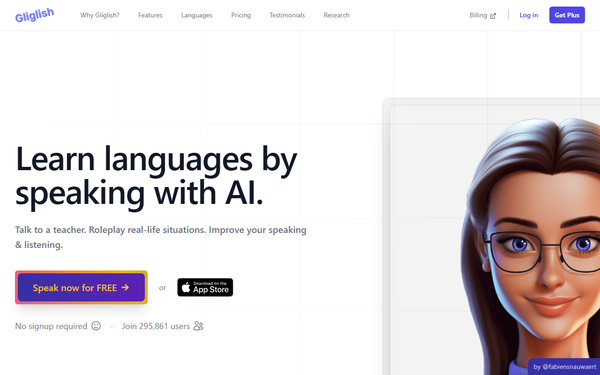
Gliglish boasts an extremely low learning curve: no account signup is required for the free tier, and users can begin speaking within seconds by selecting a language from a simple flag-based list on the free trial page. The interface is clean, voice-centric, and minimalist—featuring a chat-like display with real-time text transcription, suggestion buttons, clickable audio elements, and speed sliders. It works seamlessly in any modern web browser on desktop or mobile and includes an iOS app (with Android reportedly in development) plus a “Add to Home Screen” progressive web app option. Documentation is minimal; there are no comprehensive guides or FAQs on the site beyond basic feature descriptions, though a dedicated support page directs users to email the founder directly. Community resources are sparse, but YouTube walkthroughs from users provide visual guidance. Overall, the experience feels intuitive and engaging for quick daily sessions, though advanced users may wish for more customization or detailed help resources.
Performance & Reliability
Response times are generally fast and efficient, with smooth speech recognition and natural-sounding AI replies that keep conversations flowing. The platform handles multilingual input reliably for most users, and built-in studies cited on the site report measurable gains (e.g., 75% improvement in speaking scores and increased confidence after consistent use). Reliability is strong for web and app use, with only minor hiccups reported such as occasional microphone issues or restarts—common in voice AI tools. Common complaints from reviews include struggles with heavy non-native accents, occasionally lengthy AI responses, and limited handling of complex or nuanced topics. As of March 2026 research, no major outages or widespread downtime have been documented, and updates appear frequent based on user feedback.
Pricing & Value
Gliglish offers a generous free tier (10 minutes per day and up to 50 messages, with peak-hour restrictions and no signup needed) that allows meaningful trial use. The Gliglish Plus plan costs USD 29 per month (billed monthly) or USD 25 per month when paid annually (USD 299 total, saving about 14%). Education and business plans are available separately via dedicated calculators. There are no hidden fees, and cancellation is possible anytime (though some users report support delays in processing). Compared to traditional language tutors (often $20–50 per hour), Gliglish delivers far more practice time at roughly 1/12th the cost while remaining always available. Versus free alternatives like ChatGPT voice mode, it provides specialized language-focused feedback, suggestions, and role-play tools that feel more tutor-like. Value is excellent for dedicated speaking practice but may feel pricey for casual users or those needing full curriculum support.
Practical Tutorial
No official step-by-step documentation exists on the Gliglish site, but the process is straightforward and well-covered in community YouTube videos. Here is a complete walkthrough for a common task—practicing a real-life Spanish conversation (e.g., ordering coffee at a café) using the free tier. This example is based on the platform’s described flow and verified through user demonstrations.
- Visit https://gliglish.com/free in your browser (or open the iOS app).
- Scroll through the language list and select “Spanish (Spain)” or “Spanish (Mexico)” by clicking the flag.
- The AI greets you and prompts you to start. Choose “Talk to teacher” mode (or “Roleplay” if available) and type or speak: “Let’s role-play ordering coffee at a café in Madrid.”
- Allow microphone access when prompted. Speak your first line, e.g., “Hola, quisiera un café con leche, por favor.”
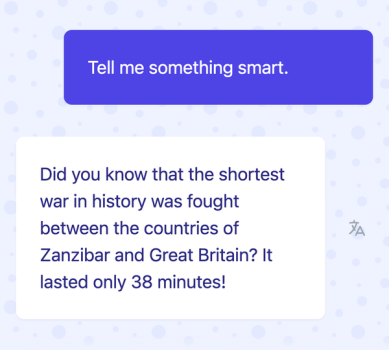
- The AI responds naturally (e.g., “¡Claro! ¿Grande o pequeño?”), transcribes your speech, highlights any grammar issues in red, provides a correction suggestion, and offers 2–3 clickable phrase suggestions (e.g., “¿Con azúcar?”).
- Adjust the AI’s speaking speed via the slider if needed (slow for beginners). Click any word in the transcript to hear pronunciation and see a translation/explanation.
- Continue the dialogue back and forth—ask follow-ups in Spanish or your native language for clarifications. End the session when your free minutes expire.
For visual guidance, see community tutorials such as “Gliglish - The Best AI To Learn A Language For Free” on YouTube. Paid users gain unlimited time and access to all 50 topics plus mini-classes.
Final Verdict
Gliglish earns a solid 4.2 out of 5 rating for its innovative focus on conversational speaking practice, excellent accessibility, and strong value for frequent users. Language learners who want affordable, on-demand speaking confidence-building—especially students, professionals, or anyone supplementing other apps/courses—should use it, as it delivers measurable fluency gains and feels like talking to a patient tutor anytime. Avoid it if you need a complete structured curriculum with deep grammar lessons, advanced pronunciation coaching across all accents, robust progress analytics, or highly responsive customer support. In one sentence: Gliglish is a highly recommended, budget-friendly AI speaking partner that transforms passive learners into confident conversationalists when used consistently alongside other resources.