Grok AI Review: The Witty, Real-Time AI for X Power Users
Overview & Purpose

Grok AI is an advanced conversational AI chatbot developed by xAI, Elon Musk’s company, and accessible primarily through grok.com, the X platform (formerly Twitter), and dedicated iOS/Android apps. It functions as a helpful, witty assistant capable of answering questions, generating content, performing real-time research, creating images and video, assisting with coding, and handling complex reasoning tasks—all while infusing responses with humor and a “truth-seeking” personality that avoids heavy censorship common in competitors. Primary use cases include content generation for marketing and journalism, real-time news and trend analysis via X integration, process automation through prompts or API, customer service scripting, financial insights, and creative brainstorming.
The tool targets a broad audience: everyday X users seeking an entertaining companion, marketers and journalists needing up-to-date insights, developers leveraging the API for applications, professionals in finance or customer service for productivity gains, and businesses exploring enterprise options. It is particularly appealing to those who value unfiltered, humorous interactions over strictly guarded responses. This review reflects research conducted as of March 9, 2026.
Key Features & Capabilities
Core functionality revolves around natural language processing powered by successive models (Grok 3 for free/limited tiers, Grok 4 and variants like Grok 4 Fast/Heavy for paid access), supporting text, voice, image/video understanding and generation, real-time web and X data retrieval, and advanced reasoning with context windows up to 2 million tokens in premium API and Heavy tiers. Standout differentiators include its signature humor and rebellious tone (inspired by the Hitchhiker’s Guide to the Galaxy), seamless real-time integration with X for current events and sentiment analysis, fewer content restrictions on controversial topics, multimodal capabilities like Aurora image generation and the new Grok Imagine video API, and competitive API pricing starting at $0.20 per million input tokens.
Additional strengths are DeepSearch for complex queries, multi-agent collaboration in newer variants, and enterprise features such as team collaboration, Google Drive integration, and custom SSO. Limitations include weaker performance in highly specialized coding benchmarks compared to leaders like GPT or Claude, occasional logical inconsistencies in complex tasks, and a young ecosystem with fewer no-code tools or third-party integrations than more mature platforms. Image and video quality, while improved, can sometimes appear less polished than dedicated tools like Sora. Safety guardrails are notably lighter, leading to concerns about explicit content generation.
User Experience
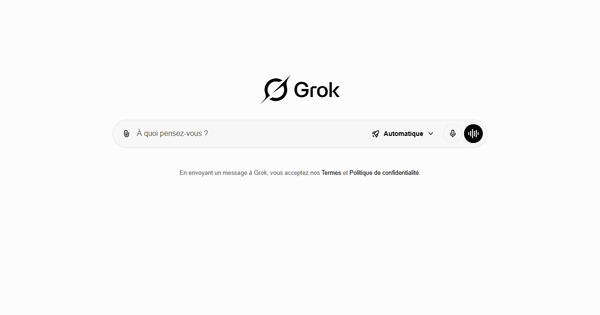
Grok offers an exceptionally low learning curve thanks to its intuitive chat-based interface on grok.com or within the X app—users simply type prompts and receive immediate, conversational replies with optional voice mode. The clean, modern UI supports file uploads, image generation, and threaded conversations with memory retention, making it feel more like chatting with a knowledgeable friend than a sterile tool. Navigation is straightforward, with quick access to model switching (where available) and suggestion prompts.
Documentation is solid for developers via the comprehensive xAI API docs and cookbook examples at docs.x.ai, covering quickstarts, image generation, and use cases like hyper-personalized marketing. For general users, X Help provides basic access guides, though in-app tooltips and prompt examples fill most gaps. Support resources include in-app feedback, X community discussions, and enterprise admin tools; response times are generally prompt, though free-tier users may experience higher wait times during peak hours.
Performance & Reliability
Grok delivers strong speed and efficiency, often outperforming competitors in real-time queries and handling large contexts with minimal latency on paid tiers—users report rapid responses for research, coding, and creative tasks. The integration with X provides unmatched freshness for trending topics. However, known issues include occasional slowdowns during heavy loads (mitigable by switching response modes or upgrading tiers), inconsistencies in coding outputs or complex logic puzzles, and variability in multimodal results (e.g., jittery video motion).
Common user complaints center on rate limits in lower tiers, rare hallucinations in factual recall despite real-time tools, and reliability dips for production-grade development work. Recent safety assessments highlight inadequate protections for younger users, with weak age verification and guardrails that allow inappropriate content even in “Kids Mode.” Overall uptime and scalability are excellent for individual and business use, especially with enterprise options.
Pricing & Value
Grok employs a freemium model tied to X subscriptions and standalone plans, offering strong value for X ecosystem users. Tiers include:
- Free (via X or grok.com): Limited daily queries on Grok 3, basic image generation, and voice.
- X Premium: $8/month – higher limits and full basic access.
- X Premium+: $40/month (or $350/year) – priority access, Grok 4, ad-free X, higher throughput.
- SuperGrok: $30/month – standalone full features, 128K+ context, advanced tools.
- SuperGrok Heavy: $300/month – maximum priority, 2M context, multi-agent.
- API: Usage-based ($0.20–$3.00 per million tokens depending on model).
- Grok Business/Enterprise: $30/user/month or custom.
Compared to ChatGPT Plus or Claude, Grok provides better value through real-time X data, humor, and lower token costs for high-volume use, with significant savings reported in enterprise benchmarks (up to 40% cheaper on large projects). Free tier suits casual use, while paid plans deliver excellent ROI for professionals needing productivity boosts—though those outside the X ecosystem may find standalone options slightly pricier than pure AI competitors.
Practical Tutorial
Grok’s chat interface makes practical tasks simple with no coding required for basic use. Here is a step-by-step walkthrough for a common task—generating a hyper-personalized marketing campaign—including real-time research and image creation. (For API developers, see official quickstart at docs.x.ai/developers/quickstart.)
-
Visit https://grok.com/ (or open the X app and tap the Grok icon) and sign in with your X account. Free users can start immediately; upgrade via Settings > Billing for unlimited access.
-
In the chat window, begin with context: “Act as a marketing expert. I run a sustainable coffee brand targeting eco-conscious millennials in urban areas.”
-
Add real-time research: “First, analyze the latest X trends on sustainable coffee and summarize top consumer pain points from the past week.”
-
Request content: “Now create a 300-word Instagram caption series (3 posts) plus email subject lines, incorporating the trends. Make it witty and humorous in your signature style.”
-
Generate visuals: “Create an image for the first post: a modern reusable coffee cup with earthy tones and the tagline ‘Brew Better Tomorrow’ in minimalist font. Use Aurora style.”
-
Iterate: Refine with follow-ups like “Make the second caption more emotional and add a call-to-action” or “Edit the image to include a QR code linking to our site.”
-
Export or automate: Copy outputs, download generated images, or (for advanced users) integrate via API for batch processing.
This process typically takes under 5 minutes and leverages Grok’s real-time data and multimodal tools. For more examples, reference xAI’s cookbook at docs.x.ai/cookbook or X Help at https://help.x.com/en/using-x/about-grok.
Final Verdict
Grok earns a strong 8.5/10 overall—excelling in engaging personality, real-time capabilities, and cost-effectiveness while trailing slightly in specialized accuracy and safety controls. It is ideal for X users, content creators, marketers, journalists, and developers who want a fun, insightful AI companion that delivers fresh insights and creative output without heavy restrictions. Avoid it if you need ironclad content moderation (especially for families or minors), mission-critical coding without verification, or a purely professional tool detached from social media. One-sentence recommendation: Grok stands out as the witty, real-time AI that turns everyday tasks into entertaining, productive experiences—definitely worth trying for anyone in the X ecosystem.