Kerplunk Review: Automate High-Volume Video Interviews with AI
Overview & Purpose
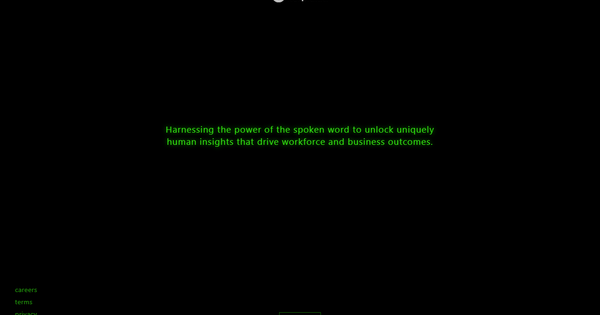
Kerplunk is an AI-powered asynchronous video interviewing platform designed to automate the initial stages of recruitment through structured, one-way video interviews. Candidates record responses to predefined questions at their convenience, while employers receive AI-generated transcripts, skill and cultural fit scores, searchable insights from spoken content (often exceeding 4,000 words per candidate versus a typical resume), and automated rankings. This enables screening thousands of applicants efficiently without real-time human involvement. Primary use cases include high-volume pre-screening for roles across industries such as tech, finance, and customer service, allowing companies to identify top talent quickly while reducing manual effort by up to 95% as claimed by the platform.
The target audience primarily consists of HR professionals, recruiters, talent acquisition teams, and hiring managers in mid-sized to enterprise organizations handling large applicant pools. It suits startups scaling rapidly or agencies managing multiple clients, but is less ideal for very small teams with low volume. Research conducted as of March 12, 2026, drawing from the official site, support resources, AppSumo listings, AI tool directories, and LinkedIn feedback.
Key Features & Capabilities
Core functionality revolves around creating customizable interview workflows: AI-assisted question generation tailored to job descriptions, candidate recording of timed one-take video responses, and post-interview AI analysis including transcription, double-speed video playback, skill scoring, communication insights, and bias-reduced ranking. Additional capabilities include job posting to external boards, customizable application forms, team collaboration on reviews, analytics dashboards, Zapier integrations, API access, and multilingual support for over 95 languages.
Standout features differentiating it from competitors like Spark Hire or HireVue include the emphasis on "spoken word" insights for deeper human assessment (tone, authenticity, and detailed verbal content), built-in interview integrity safeguards (e.g., detecting tab-switching or external assistance), and rapid processing for massive scale. Security features such as SOC2 compliance add enterprise appeal.
Limitations include its focus exclusively on asynchronous/one-way interviews (no live video options), potential gaps in full ATS integration beyond basic APIs/Zapier, and reliance on candidates having reliable internet and recording setup. As a relatively new entrant (circa 2023), some enterprise-level reporting or advanced customization may feel less mature compared to established platforms.
User Experience
Setup and daily use feature an intuitive dashboard praised in user feedback for clean navigation and quick onboarding for recruiters. The learning curve is low for hiring teams—most can create and launch interviews in minutes—while candidates receive simple links and record responses in under 10 minutes typically. Some AppSumo users noted occasional complexity in advanced workflows, but overall descriptions highlight ease and speed.
Interface quality is modern and focused on recruiter efficiency, with searchable insights and visual rankings. Candidate experience is standardized and flexible but may require brief onboarding for those unfamiliar with video formats. Documentation is solid via the dedicated Help Center at support.kerplunk.com, with articles covering question setup, result viewing, and integrity features; support appears responsive through in-app channels or email, though public review volume is limited.
Performance & Reliability
The platform handles high volumes efficiently, processing interviews rapidly with AI insights available shortly after submission and enabling recruiters to review content at 2x speed. Scalability stands out for vetting thousands of applicants without proportional time increases.
Known issues are minimal in public sources; common general complaints about asynchronous formats (e.g., candidates feeling less personal connection) apply here but are not unique. No widespread reports of downtime, accuracy problems, or major bugs as of March 2026. The interview integrity tools enhance reliability by ensuring authentic responses. Early feedback emphasizes consistent performance for screening, with positive notes on AI accuracy for skills and fit evaluation.
Pricing & Value
Kerplunk offers a freemium/trial model with paid subscription tiers. Typical structure includes Starter plans around $99/month (or as low as $24/user in some reports), Professional at ~$199/month, and Enterprise/Premium at $499/month or custom, often billed per user or organization. Lifetime deals have been available via AppSumo with interview quotas (e.g., 250–1,200 per month) for one-time payments starting at $49–$69. Exact pricing should be verified on the site as it varies with usage and promotions.
Value is strong for high-volume users: the time savings, bias reduction, and data-driven insights deliver clear ROI compared to manual screening or basic video tools. It outperforms resume-based methods and competes well on cost-efficiency against alternatives, especially with lifetime options for smaller teams. Enterprise users benefit from scale and security, though very low-volume hirers may find subscriptions less justified without heavy usage.
Practical Tutorial
Official tutorials and guides are available in the Kerplunk Help Center (https://support.kerplunk.com/), particularly under Hiring Organizations collections for step-by-step setup. Below is a practical walkthrough for the common task of launching a job interview and reviewing candidates, based on documented flows and platform descriptions.
-
Sign up and create a hiring organization/job: Visit kerplunk.com, create a free account, and set up your organization profile. Post a job or import one, adding a customizable application form (resume upload optional).
-
Set interview questions: In the dashboard, navigate to interview setup. Use AI to generate 5–10 tailored questions based on the job description, or add custom text-based prompts (e.g., "Describe your experience with [skill]" or behavioral scenarios). Set time limits per response (typically 1–3 minutes) and enable integrity features.
-
Publish and invite candidates: Activate the interview link or integrate with job boards. Share via email, embed on your careers page, or post publicly. Candidates receive instructions and record videos asynchronously on their device.
-
Candidates complete interviews: Applicants click the link, answer questions via webcam (one take per response), and submit. Process is mobile-friendly and multilingual.
-
Review and analyze in dashboard: Once submitted, AI automatically transcribes, scores skills/communication/fit, and generates insights. Play videos at 2x speed, search spoken content, view rankings, and collaborate with your team. Shortlist top candidates or export reports.
-
Take action: Use rankings to advance candidates to live interviews. Track analytics for process optimization.
For official details or variations, refer directly to support.kerplunk.com articles like "How to Set Interview Questions" and "Viewing Interview Results." A demo is often available upon signup.
Final Verdict
Overall rating: 4.2 out of 5. Kerplunk excels as a time-saving, bias-reducing tool for high-volume recruitment teams seeking scalable, data-driven screening with rich spoken insights. It is ideal for HR professionals and recruiters in growing organizations that handle hundreds of applications and want to focus human effort on final stages. Avoid it if your process requires live interactions early, you operate at very small scale with minimal applicants, or you prefer fully mature enterprise suites with extensive ATS integrations—consider supplementing with traditional methods in those cases. Kerplunk is a smart investment for modern recruiters prioritizing efficiency and fairness in hiring.