LambdaTest Review: The Ultimate AI-Powered Testing Cloud Platform
Overview & Purpose
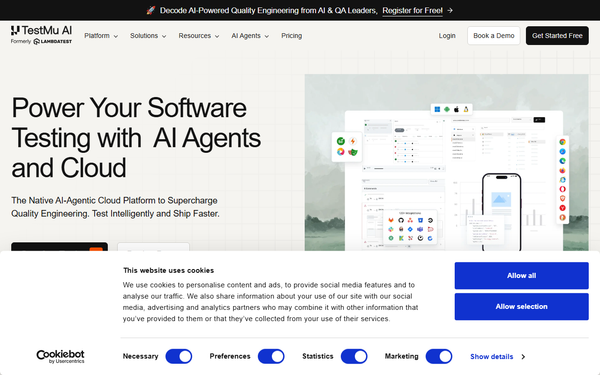
LambdaTest, now operating as TestMu AI (formerly LambdaTest), is a cloud-based GenAI-powered quality engineering platform that enables comprehensive cross-browser, mobile app, and automation testing on thousands of real devices, browsers, and operating systems. It allows teams to perform live interactive testing, automated Selenium/Appium scripts, visual regression, accessibility checks, and now autonomous AI-agentic test generation and execution across web, mobile, API, database, and performance layers. Primary use cases include ensuring consistent user experiences across diverse environments, accelerating regression and cross-platform testing, and reducing the need for in-house device labs or complex infrastructure.
The target audience spans QA engineers, software developers, DevOps teams, and enterprises in web and mobile app development—particularly those handling e-commerce, SaaS, or high-traffic applications where broad compatibility and rapid release cycles are critical. As of March 2026, the rebrand to TestMu AI emphasizes its evolution into a full-stack AI Agentic testing cloud, building on the original LambdaTest foundation while adding autonomous agents for faster, smarter testing.
Key Features & Capabilities
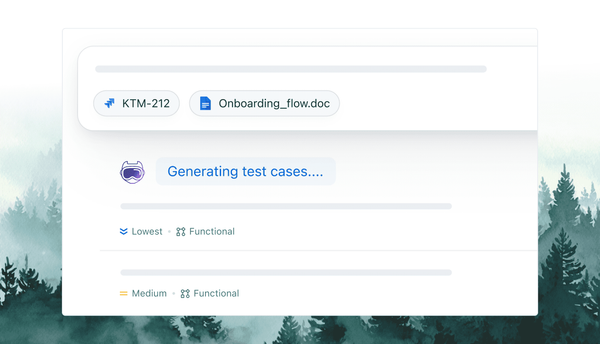
Core functionality revolves around a unified cloud grid supporting over 3,000 desktop browser-OS combinations, 8,000+ real mobile devices (Android/iOS), and parallel test execution via HyperExecute for up to 70-78% faster runs. Standout features include Kane AI—an autonomous end-to-end testing agent that uses natural language prompts, tickets, images, or code diffs to plan, author, debug, and evolve tests; AI-driven visual UI testing and risk scoring; real-time geolocation and network throttling simulation; manual accessibility testing with VoiceOver/TalkBack; and seamless integrations with Jira, Slack, GitHub, CI/CD tools (Jenkins, GitLab), and frameworks like Selenium, Appium, Cypress, and Playwright.
Differentiators from competitors like BrowserStack or Sauce Labs include the pioneering AI-agentic approach (Kane AI for agent-to-agent browser testing and multi-modal inputs), enterprise-grade security certifications (SOC2), and professional services for custom QE transformations. Limitations include no fully on-premises deployment option (cloud-only), occasional gaps in ultra-niche legacy browser support, and AI features still maturing for highly complex enterprise stacks requiring heavy customization. The platform excels in scalability but may feel overkill for purely static sites with minimal device variance.

User Experience
LambdaTest offers an intuitive, modern dashboard with a low learning curve for beginners—most users can launch their first test within minutes after signup. The interface is clean, responsive, and well-organized, with quick-access sections for real-time testing, automation, and analytics; interactive sessions feel seamless with debugging tools, screenshots, video recording, and session sharing built-in. Documentation is extensive via the official support hub (including API references, guides, and a learning hub), though some users note occasional outdated sections or confusing setup steps for advanced AI features.
Support resources shine with 24/7 availability (premium in Enterprise), responsive chat/email, community forums, and detailed knowledge base. Overall, the platform earns high marks for accessibility, making it suitable even for non-specialist team members while scaling to power users.
Performance & Reliability
Tests execute efficiently thanks to HyperExecute’s smart orchestration and a massive real-device cloud, often delivering 50%+ reductions in execution time compared to traditional setups. Parallel sessions handle high volumes reliably, with features like auto-healing locators in automation adding stability. However, common complaints include occasional lag or boot delays in live real-device sessions (especially during peak hours), intermittent session disconnects, and slightly slower performance versus local environments for resource-intensive animations or long runs. Reliability is generally strong per 2026 user feedback (minimal widespread outages reported), though device availability can occasionally fluctuate, and some note minor issues with screenshot capture in bulk URL testing. These are balanced by frequent updates and AI insights that proactively flag risks.
Pricing & Value
LambdaTest employs a flexible, usage-based structure with a generous free tier and clear scaling:
- Free Plan ($0 forever): 60 minutes/month live testing, limited sessions on 200+ desktop browsers, basic emulators, and 100 accessibility tests.
- Virtual Live Plan ($15/month billed annually): Unlimited live testing on 3,000+ browsers, emulators, geolocation, integrations, and debugging tools.
- Real Device Plus Live Plan ($39/month billed annually): Adds 8,000+ real devices, AI autonomous testing, native/hybrid app support, network simulation, and multi-device parallel.
- Enterprise (custom, contact sales): Unlimited users, SSO, advanced security, dedicated support, beta access, and AI analytics.
Annual billing saves up to 20%; on-demand passes and add-ons for HyperExecute or Smart UI are available. Value is excellent for teams replacing physical labs or scaling automation—users report significant time/cost savings versus maintaining in-house setups, though some find paid tiers pricey for very light usage or wish for more granular add-ons. Compared to alternatives, it offers competitive entry pricing with superior AI innovation and real-device depth, making the ROI strong for mid-to-large teams focused on quality acceleration.
Practical Tutorial
A common task is performing real-time interactive manual testing on a website across browsers and devices—ideal for quick compatibility checks before release. Here’s a step-by-step walkthrough (updated for the 2026 platform; tested conceptually from official flows):
- Sign up for a free account at accounts.lambdatest.com/register (or log in if existing).
- From the dashboard, navigate to Real Time Testing > Browser Testing (or the mobile equivalent for apps).
- Enter your website URL (e.g., https://example.com) in the input field.
- Select environment: Choose OS (Windows, macOS, iOS, Android), browser/version (Chrome, Safari, Firefox, etc.), and resolution or real device from the grid. Enable options like geolocation or network throttling if needed.
- Click Start to launch the interactive session—the live browser window opens in the cloud with full mouse/keyboard control.
- Interact with the site: Click, scroll, fill forms, or simulate user flows. Use built-in tools for DevTools inspection, screenshots, video recording, or bug annotations.
- End session when done; results (logs, videos) auto-save to your dashboard for sharing or review.
For automation follow-up, generate a Selenium sample from the dashboard (under Automation > New Test) and run it with your username/access key. Official video tutorials and full guides are available at the LambdaTest Learning Hub (lambdatest.com/learning-hub) or support docs (lambdatest.com/support/docs). This process typically takes under 5 minutes end-to-end and demonstrates the platform’s core value instantly.
Final Verdict
Overall rating: 4.6/5 (aligned with aggregated 2026 user ratings across Capterra and Gartner Peer Insights). Teams of developers, QA engineers, and enterprises should use this tool for its unmatched device coverage, AI-driven automation speed, and cost-effective elimination of hardware maintenance—especially if shipping frequent updates across browsers/mobile. Avoid it if you require fully on-premises control, operate on extremely tight budgets without scaling needs, or prefer simpler local emulators without cloud dependencies.
LambdaTest (now TestMu AI) delivers a powerful, future-proof testing cloud that accelerates quality without the headaches—strongly recommended for any modern software team prioritizing coverage and velocity.