LitRPG Adventures Review: The Ultimate AI Tool for RPG Creators
Overview & Purpose
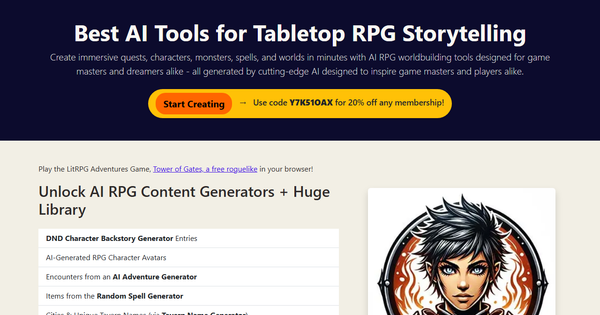
LitRPG Adventures Workshop is an AI-powered platform that generates immersive tabletop RPG content such as character backstories, avatars, quests, spells, creatures, dungeons, magic items, taverns, cities, and more. It combines large language models with image generation to help users create ready-to-use elements for campaigns in minutes, while also maintaining a massive public library of over 250,000 community-contributed RPG resources.
The tool's primary use cases include rapid session preparation for game masters, worldbuilding inspiration for fantasy authors, and prototyping mechanics or settings for indie game designers and developers. It supports popular systems including Dungeons & Dragons 5e, Pathfinder 2e, Old School Renaissance (OSR), FATE, narrative RPGs, and homebrew/custom rulesets. As of April 2026, the platform has evolved from its original GPT-3.5 and DALL-E 2 foundation to use more advanced GPT-4o and DALL-E 3 models, enabling higher-quality text and visual outputs.
Key Features & Capabilities
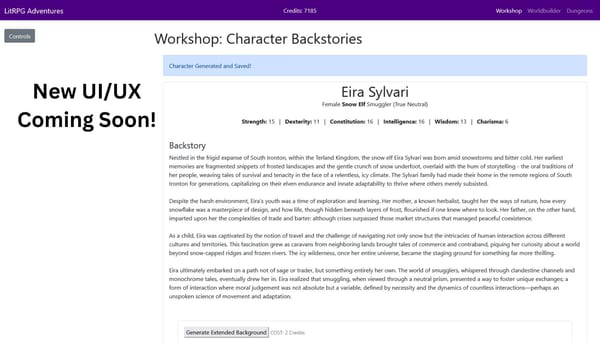
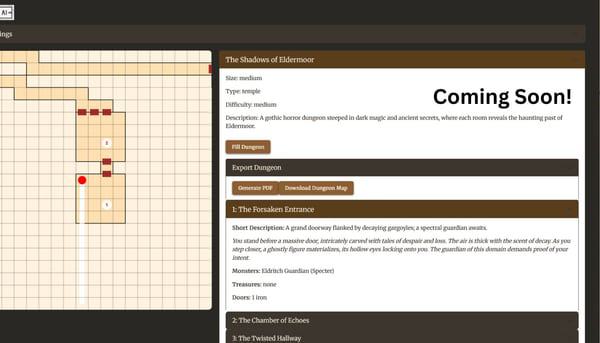
Core functionality revolves around more than three dozen specialized AI generators. Standout tools include character backstory and avatar creators, procedural dungeon and hex worldbuilders (blending traditional generation with AI flair), quest and random encounter generators, creature and undead statblock creators, magic item/spell generators, location builders (taverns, magic shops, overland sites, cities, governments), and even sci-fi options like spaceships, planets, and Shadowrun characters.
Differentiating features include the enormous searchable public library (freely browsable for inspiration), commercial licensing options for published creators, weekly content updates, and integration of both text and image outputs in one workflow. Users can generate high-fidelity avatars via DALL-E 3 alongside detailed lore, and the procedural tools (e.g., hex crawls or full dungeon layouts) add mechanical depth beyond pure prompting. A free browser-based roguelike game called Tower of Gates offers light entertainment and showcases the tech.
Limitations include credit-based consumption (generations deduct credits, though most are inexpensive), occasional generic or off-theme AI output that requires editing, and limited native integration with virtual tabletops or automated statblock export beyond basic copy-paste. Not every generator supports every RPG system equally well, with stronger coverage for D&D-style fantasy.
User Experience
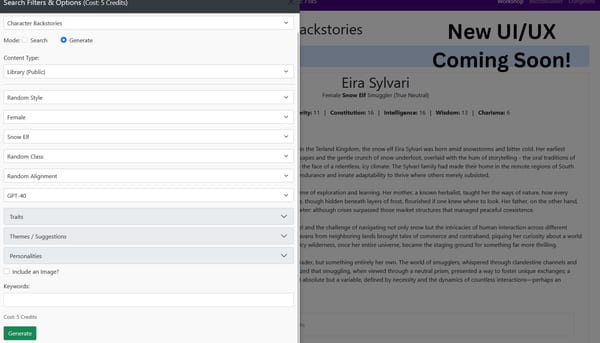
The platform is generally accessible once a membership is active, with a straightforward flow of selecting a generator, providing optional parameters or prompts, and reviewing outputs. However, user feedback frequently describes the interface as clunky and not particularly intuitive, with navigation that can feel overwhelming for newcomers.
The learning curve is moderate—basic generators work quickly, but mastering advanced options like the hex worldbuilder or fine-tuning prompts takes practice. Documentation is minimal on-site; users rely heavily on the active Discord community and occasional YouTube dev-log videos for guidance. No comprehensive in-app tutorials were evident during research, though sample outputs on the /ai-tools/ page help illustrate capabilities.
Performance & Reliability
Generation speed is typically fast for text outputs but can slow noticeably during image creation or peak times, with some users reporting frustrating loading delays—especially problematic during live game sessions. Reliability is solid for core generators, with consistent weekly updates and an active developer presence. Common complaints center on occasional repetitive or shallow content rather than outright failures, and the credit system prevents unexpected overages. No widespread outages or major bugs were reported in recent user discussions.
Pricing & Value
LitRPG Adventures uses a credit-based system with flexible entry points: a Starter Pack at $6 (one-time, 600 credits), Bronze Monthly at $5 (700 credits recurring), and longer-term options such as Copper three-month packs or yearly plans around $30–$50 depending on credits. Credits cost roughly $0.01 each, and most generations consume only a few. A 20% discount code (Y7K51OAX) is often promoted. Public library browsing and the free roguelike require no payment, while full generator access needs membership.
Value is strong for frequent Dungeon Masters or writers who generate content weekly—the time saved on prep often outweighs the modest subscription cost. Compared to general-purpose AI tools (ChatGPT, Midjourney), it offers far more specialized, system-aware prompts and a curated library, reducing the need for custom engineering. Heavy users or commercial creators may find the credit model restrictive without upgrading, but one-time packs suit occasional needs.
Practical Tutorial
Official walkthroughs are limited, but the developer maintains helpful YouTube videos such as “Master the Future of D&D With RPG + AI.” Here is a practical step-by-step for a common task—generating a complete dungeon with backstory and map elements (as of April 2026):
- Visit https://www.litrpgadventures.com/ and click “Start Creating” to reach the signup page. Create a free account or use the 20% discount code during membership selection.
- Choose a paid plan (Starter Pack is ideal for testing) and complete payment to unlock generators.
- From the dashboard or /ai-tools/ page, navigate to the Dungeon Generator.
- Enter parameters: select system (e.g., D&D 5e), theme (e.g., “ancient elven ruin haunted by undead”), size (small/medium/large), and any custom prompts like “include a trapped library and boss chamber with lore tie-in to a player character’s backstory.”
- Click Generate. The tool outputs a narrative backstory, room-by-room descriptions, encounter tables, and (with DALL-E 3) visual map concepts or key art.
- Review results, regenerate specific sections if needed, copy text to your notes, and download images. Save favorites to your personal library.
- For advanced use, combine with the Hex Worldbuilder for overland approach maps or export statblocks to your preferred VTT.
This process typically takes under five minutes and produces a playable dungeon ready for minor tweaks.
Final Verdict
Overall rating: 7.5/10 — a specialized, time-saving powerhouse for RPG creators that shines in niche utility but is held back by usability quirks and variable output quality.
Game masters, fantasy authors, and indie designers who run frequent sessions or need rapid inspiration should use this tool—it dramatically cuts prep time and sparks creativity through its tailored generators and vast library. Avoid it if you prefer free general AI tools, need pixel-perfect integration with specific VTTs, or are sensitive to occasional generic content and a dated-feeling interface.
One-sentence recommendation: LitRPG Adventures Workshop is an excellent credit-based AI companion for busy Dungeon Masters and worldbuilders who value specialization over polished consumer UX.