Luna AI Review: The Ultimate AI Project Manager for Jira Teams
Overview & Purpose

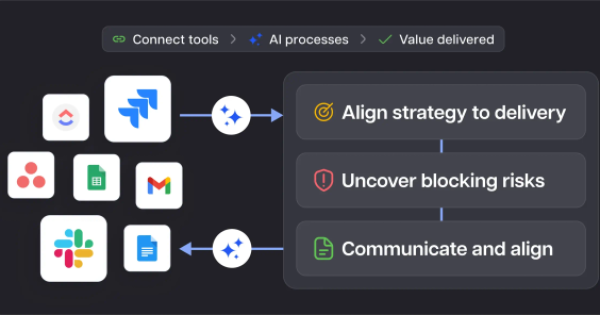
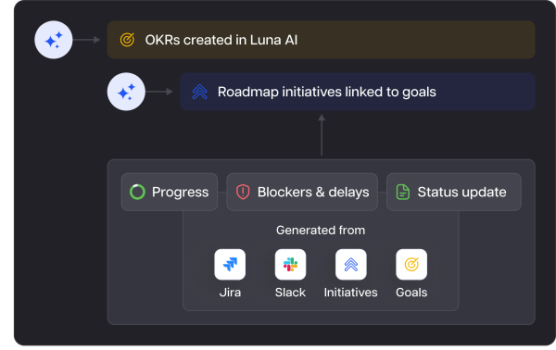
Luna AI is an AI-powered project management platform that acts as an “AI Project Manager” for product and engineering teams. It connects high-level strategy (OKRs and roadmaps) directly to execution data in Jira and Slack, automatically tracking progress, surfacing risks, generating status updates, and drafting executive summaries. Primary use cases include strategic alignment from goals to tickets, proactive risk mitigation in complex Jira environments, instant stakeholder reporting, and accelerated product launches by reducing manual documentation and meetings.
The tool is purpose-built for organizations already using Jira, turning messy project data into clear, actionable insights without forcing workflow changes. Target audience is primarily product managers, engineering leaders, CPOs, CEOs, and cross-functional stakeholders (including non-technical teams) at mid-to-large companies that rely on Jira for execution. It is not aimed at general developers, marketers, or designers outside of product/engineering contexts, nor at teams using other primary tools like Asana or ClickUp as their core system (though limited sync is supported).
Key Features & Capabilities
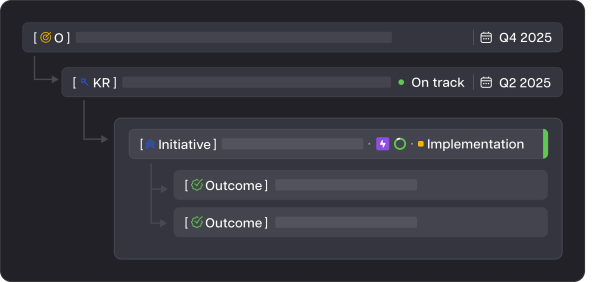
Core functionality revolves around seamless Jira and Slack integration: AI analyzes live issue, sprint, and fix-version data to track OKRs, model capacity and ROI, flag risks (blocked dependencies, scope creep, stalled work, misalignment), and auto-generate crisp updates. Standout features include TUYP (“Tell Us Your Plan”)—an AI planner that turns unstructured notes or PRDs into fully linked OKRs, epics, stories, and Jira-ready tickets in minutes—and human-approved AI drafts that pull from both Jira and Slack for accuracy. Other differentiators are customizable portfolio views, automated stakeholder notifications, milestone approval flows, and “Insights Hub” for controlled visibility, all while preserving existing Jira workflows.
Compared to competitors like Jira Align, Asana, or ClickUp AI, Luna stands out by focusing exclusively on launch success and executive alignment rather than just task tracking, with proactive risk intelligence and zero-setup Slack bidirectional sync. Limitations include no automatic posting of updates (human review required), primary dependence on Jira (other integrations are read/sync only), and an upcoming AI data-hygiene tool still in development. No native support for non-Jira-heavy teams or advanced capacity modeling yet (coming soon).
User Experience
Setup takes minutes via instant Jira/Slack OAuth—no process changes or data cleanup required. The interface is clean and dashboard-focused, with customizable views (table, timeline, Kanban) and an Insights Hub that feels more like an executive briefing tool than traditional PM software. Learning curve is low for Jira-familiar users; AI outputs are editable and transparent.
Documentation is lightweight (basic “Luna 101” guides and FAQs) but supplemented by responsive email support and scheduled onboarding for paid users. No in-depth video library or community forum exists yet, though the product’s FAQ and blog provide practical examples. Overall, users and testimonials describe it as intuitive and time-saving.
Performance & Reliability
Luna performs efficiently, delivering real-time insights and AI generations in seconds using live data. Risk detection and summaries are praised for accuracy because the AI is fine-tuned on Jira/Slack signals and outputs are always human-reviewed before sharing. No widespread outages or major reliability complaints appear in public sources as of March 2026.
Known issues are minor: occasional need to refine TUYP prompts for complex plans and the fact that AI does not auto-post (by design for control). Integration stability is strong once connected, with two-way sync handling custom Jira workflows reliably. Independent G2 feedback highlights strong usability and AI quality, positioning Luna as a “high performer” in the Product Management category.
Pricing & Value
Luna offers a generous free tier ($0) limited to 3 makers (editors), unlimited read-only members/guests, and core AI features including OKR generation, risk tracking, and basic roadmaps. Paid plans (Launch tier and Enterprise) remove limits on makers, custom views, templates, and roadmaps. Enterprise pricing starts at $15 per maker per month (billed only for editors; members remain free), with custom contracts, SSO, dedicated support, and onboarding. Third-party sources list starter paid plans around $39/user/month, likely reflecting tier variations or annual discounts.
Value is excellent for Jira-centric teams: users report saving 6–8 hours weekly on reporting and cutting delays by 30%, easily justifying paid tiers for growing teams. Compared to Jira Align or manual tools, Luna delivers higher ROI through AI automation and risk prevention without the heavy implementation cost. Free tier suits small teams or pilots; larger organizations benefit from enterprise security and advisory services.
Practical Tutorial
Luna provides a no-signup demo tool called TUYP (Tell Us Your Plan) for turning ideas into Jira tickets—ideal for sprint or initiative planning. Here is a real-world step-by-step walkthrough based on official examples (tested via the public tool at withluna.ai/tell-us-your-plan).
- Visit https://withluna.ai/tell-us-your-plan (no account needed).
- Paste unstructured input—e.g., “We want to launch a sports category on Netflix” or meeting notes: “Based on customer feedback from our AI voice assistant launch, improve transcription accuracy, add a help prompt, and fix iOS permissions.”
- (Optional) Add context like target sprint or fix version.
- Click Generate. TUYP instantly outputs:
- Objective + Key Results
- Initiatives with mini-PRDs
- Epics and user stories complete with acceptance criteria, user context, technical specs, and metrics
- Parent-child hierarchy, sprint tags, and fix-version metadata
- Review and edit the generated plan (AI flags gaps like missing edge cases).
- (With Jira connected in a full account) Click “Push to Jira” for one-click bulk creation of tickets with correct linking and metadata.
Example output for the Netflix sports input includes fully linked stories such as “Design and implement match score ticker” ready for immediate sprint use. The same flow works for OKR creation or roadmap modeling. For full-team use, connect Jira/Slack in minutes via the main app and repeat inside your workspace for automatic risk flagging and updates. Official blog and support are available for advanced prompting tips.
Final Verdict
Overall rating: 4.5/5. Luna AI excels at solving real pain points for Jira-based product teams—cutting reporting time dramatically while improving visibility and launch success—but its niche focus and limited independent reviews keep it from a perfect score.
Who should use this tool: Product managers, engineering leaders, and executives at mid-to-large organizations already invested in Jira who want to reclaim hours from status updates and proactively manage risks.
Who should avoid this tool: Teams not using Jira as their primary tracker, very small startups happy with native Jira reporting, or organizations needing deep non-Jira integrations or fully autonomous (no-review) AI posting.
Luna AI is a powerful AI co-pilot that transforms Jira chaos into strategic clarity—highly recommended for any product team tired of manual alignment work.