Maximus Review: The Affordable AI Sales Coach for Better Calls
Overview & Purpose
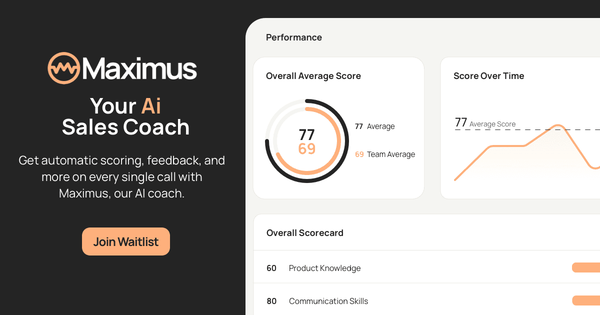
Maximus is an AI-powered sales coaching tool that automatically analyzes recorded sales calls to deliver scoring, detailed feedback, personalized coaching recommendations, and performance analytics. It processes call recordings and transcriptions to evaluate metrics such as customer engagement, objection handling, closing techniques, and overall effectiveness, turning raw call data into actionable insights for reps and managers. Primary use cases include post-call performance review for individual skill development, team benchmarking, pipeline coaching, and scaling sales enablement without requiring constant manager involvement—ideal for B2B sales teams conducting high volumes of Zoom or similar virtual meetings.
The target audience is sales representatives, sales managers, enablement teams, and revenue operations professionals in growing sales organizations. It is particularly suited for sales-focused users rather than developers, marketers, or designers, though sales enablement leaders may integrate it into broader go-to-market strategies.
Key Features & Capabilities
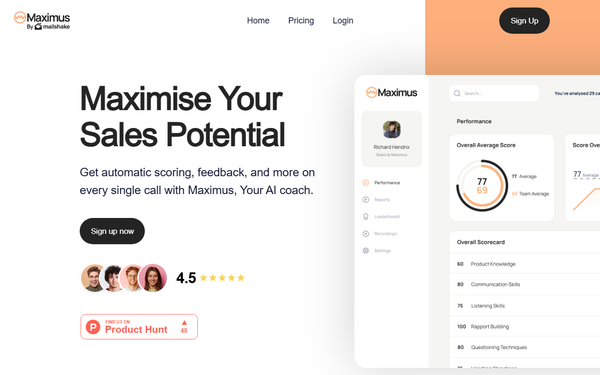
Core functionality centers on seamless integration with call recording platforms (primarily Zoom), automatic detection and analysis of new cloud recordings (polling approximately every 15 minutes), AI-driven scoring against customizable or standard criteria, and generation of personalized feedback reports with specific improvement suggestions. Users access a centralized dashboard for individual and team-level insights, including trend tracking and benchmark comparisons.
Standout features that differentiate it from competitors include its always-on virtual coach model that automates what traditional sales managers do manually—providing consistent, data-backed feedback on every single call without extra effort—and its emphasis on affordability and simplicity within the Mailshake sales ecosystem. This makes deep call intelligence accessible without the complexity or cost of full conversation intelligence platforms. It excels at turning call data into competitive advantage through analytics on engagement and closing patterns.
Limitations include a primary focus on post-call analysis rather than real-time in-call prompting or advanced video sentiment detection found in premium tools. Some site pages appear templated or placeholder-heavy (e.g., generic FramerBite references), suggesting the product is still maturing. Missing features may include deep CRM integrations, custom AI model training, or multi-channel (phone/non-Zoom) support beyond basic recordings. Independent verification of advanced capabilities is limited due to the tool’s relative newness.
User Experience
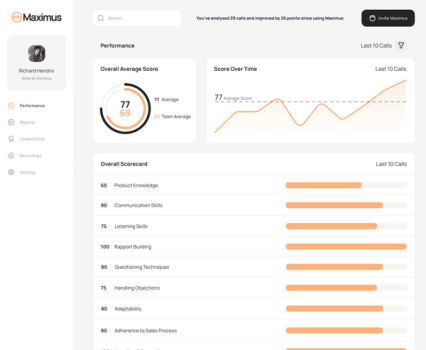
Maximus offers a low learning curve, with straightforward setup via a clean SaaS dashboard that requires minimal technical knowledge—sales reps can be productive within minutes of connecting accounts. The interface quality appears modern and intuitive based on available descriptions, focusing on clear scorecards, highlighted feedback quotes, and visual analytics rather than overwhelming data dumps.
Documentation and support resources include on-site guides for key tasks like Zoom integration, though they are concise and basic. Paid plans likely unlock priority support or additional resources; free users rely on self-service. Overall, the experience prioritizes speed and usability for busy sales professionals, with potential for quick wins in feedback application.
Performance & Reliability
Call processing is efficient, with automatic polling and AI analysis delivering insights shortly after recordings upload, enabling near-real-time coaching cycles. Speed supports high-volume teams without noticeable delays in standard use cases. Reliability appears solid for core transcription and scoring tasks, with no widespread outages or major technical complaints reported in available sources as of early 2026.
Known issues or common complaints are minimal due to the tool’s emerging status; general AI limitations (such as occasional transcription inaccuracies in accented speech or noisy calls) may apply but are not prominently documented. Early users in promotional contexts report consistent performance for standard sales calls.
Pricing & Value
Maximus offers flexible pricing with a free tier or trial for basic testing, a Professional plan at approximately $99 per month (billed annually for discounts), and organization-level custom pricing scaling from as low as $9 per sales rep per month (including 100 calls). Enterprise options support team growth with per-rep billing.
The value proposition is strong for cost-conscious sales teams compared to premium alternatives like Gong or Chorus, which often exceed $100+ per user monthly for similar (or more advanced) conversation intelligence. Maximus delivers high ROI through automated coaching that can improve win rates and rep performance without additional headcount, making it particularly compelling for mid-market or startup sales organizations seeking quick, scalable enablement.
Practical Tutorial
Official documentation is available on the site but is concise; no comprehensive video tutorials were located, so the following is a real-world walkthrough for a common task—analyzing a sales call for coaching insights—based on documented integration steps and dashboard functionality.
- Visit https://usemaximus.com/ and sign up for a free account or trial using your work email.
- Log into your dashboard and navigate to settings or integrations. Click “Connect with Zoom” (or your preferred recording source) and grant necessary permissions for cloud recordings.
- Schedule and conduct a sales call in Zoom, ensuring it is recorded to the cloud (required for automatic detection).
- Wait for Maximus to poll and process the recording (typically within 15 minutes; refresh the dashboard if needed).
- Open the call in the dashboard to view the AI-generated score (e.g., 82/100 overall, with category breakdowns like “Questioning: Strong” or “Closing: Needs Work”), detailed feedback excerpts, personalized coaching tips (e.g., “Try using more benefit statements early to boost engagement”), and benchmark comparisons against your team.
- Export or share the report, implement the tips in your next call, and track improvement over time in the analytics section.
For more details, refer to the official documentation at https://usemaximus.com/documentation. Teams can request a demo via the site for customized onboarding.
Final Verdict
Overall rating: 4.0/5.
Sales teams and managers in B2B environments who want affordable, automated call coaching to boost performance and scale enablement efforts should use this tool—it excels at turning every recorded conversation into growth opportunities with minimal overhead. Larger enterprises requiring enterprise-grade conversation intelligence, real-time prompting, or extensive custom integrations should avoid it until the product matures further with more validated case studies. Maximus is a promising, accessible AI coach that democratizes high-quality sales feedback for teams ready to improve closing rates without breaking the bank.