Mem0 Review
Overview & Purpose

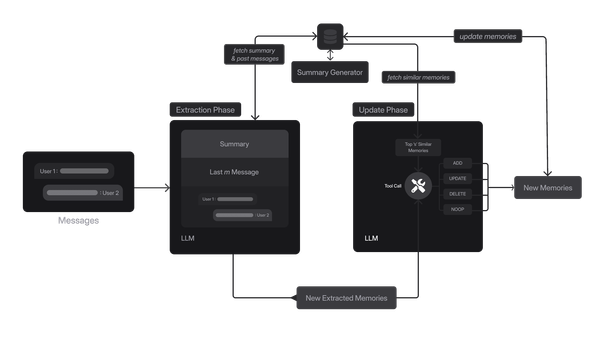
Mem0 is a universal, self-improving memory layer designed specifically for LLM-powered applications and AI agents. It solves the core statelessness problem of large language models by intelligently extracting, storing, filtering, and retrieving relevant context—such as user preferences, conversation history, and complex relationships—across sessions and devices. This enables personalized, context-aware experiences without repeatedly feeding entire chat histories into prompts, resulting in up to 80-90% token savings, lower latency, and higher response quality.
Primary use cases span customer support (e.g., personalized recovery journeys at scale), personal assistants (chronic condition companions or therapy trackers), educational tools, healthcare patient assistants, e-commerce recommendations, and autonomous AI agents. It adapts dynamically to domains like education, sales, and CRM.
The target audience is developers and engineering teams building AI applications (over 100,000 users reported), as well as enterprises needing production-grade, compliant infrastructure. It supports both hobbyists via open-source self-hosting and large organizations via a fully managed cloud platform.
Key Features & Capabilities
Core functionality revolves around a simple yet powerful Memory API (Python/JS SDK or REST) that supports CRUD operations on memories tied to user_id, session, or agent identifiers. Memories are stored in a vector database with optional knowledge graph overlays for entity relationships, enabling semantic search, updates, and automatic fact extraction from conversations or multimodal inputs (text, images, documents via vision models).
Standout differentiators include:
- Memory Compression Engine: Dynamically summarizes and compresses history, delivering verified benchmarks of 26% higher response accuracy, 91% lower latency, and 90% fewer tokens compared to native OpenAI memory approaches.
- Graph Memory (Pro+): Builds and queries complex relationship structures (e.g., linking dietary preferences to allergies or patient history across interactions).
- Multimodal support: Handles images, PDFs, and other media alongside text for richer context.
- Self-improving and adaptive: Continuously refines memories based on new data and domain context; includes built-in observability, TTL, versioning, and exportable traces.
- Broad integrations: One-line setup with LangGraph, CrewAI, Vercel AI SDK, OpenAI, and 20+ frameworks; plus Model Context Protocol (MCP) server for seamless agent tool use (e.g., Claude Desktop, Cursor).
- Enterprise-grade: SOC 2, HIPAA, BYOK encryption, on-prem/air-gapped deployment options, audit logs, and SSO.
Limitations include no native temporal knowledge graphs (unlike some competitors), occasional extraction inaccuracies in edge cases requiring manual tuning, and advanced features like full graph memory or analytics locked behind paid tiers. Self-hosted versions require managing your own vector store (e.g., Qdrant) and LLM provider keys. It is strictly developer-oriented—no no-code interface for end users.
User Experience
Integration is exceptionally straightforward with a minimal learning curve for anyone familiar with Python, JavaScript, or basic LLM SDKs. A single pip install mem0ai (or npm equivalent) followed by client initialization and one-line add()/search() calls gets most users running in under 60 seconds. The managed platform dashboard provides clean API key management, usage analytics, and memory inspection tools with timestamped, searchable views.
Documentation is excellent—comprehensive quickstarts, cookbooks for multimodal/graph use cases, full API references, migration guides (v0 to v1), and framework-specific examples. Community support via Discord and GitHub is active; enterprise users get private Slack channels. No significant interface complaints surfaced; the SDK feels lightweight and production-ready, though hierarchical workspace/project/user structures can feel slightly overkill for solo developers.
Performance & Reliability
Mem0 delivers strong production performance: retrieval is fast and efficient, with real-world case studies showing 40% token reductions at scale (e.g., OpenNote) and successful handling of 80,000+ users (Sunflower Sober). Independent and internal benchmarks consistently highlight superior accuracy and cost efficiency over raw context stuffing or basic alternatives.
Known issues are minor and infrequent: occasional integration friction with certain LangChain setups (e.g., dependency warnings), the need to occasionally clear/reseed memories for tool-calling agents, and performance tuning required for very large self-hosted deployments. Reliability is high overall, with traceable versioning and automatic updates in the managed tier; no widespread outages or critical complaints were evident in reviews or forums as of March 2026. The v1.0 release introduced async-by-default clients and improved rerankers, addressing earlier scalability feedback.
Pricing & Value
Mem0 offers a tiered structure with generous entry points:
- Hobby/Free: 10K memories and 1K retrieval calls/month—ideal for testing and small projects.
- Starter: $19/month for 50K memories and 5K retrieval calls.
- Pro: $249/month for unlimited memories, 50K retrieval calls, Graph Memory, advanced analytics, and priority features.
- Enterprise: Custom (usage-based or flat), including unlimited everything, on-prem, private support, SLA, and compliance extras.
- Startup Program: Eligible early-stage companies (<$5M funding) receive 3 months of free Pro access (up to $1,000 value).
Value is compelling for production use: token savings often offset costs within weeks, and the combination of managed simplicity plus open-source flexibility (Apache 2.0, self-host for zero ongoing fees beyond your infra) outperforms many pure open-source or limited competitors. Compared to alternatives like Zep or LangMem, Mem0 provides broader integrations, compliance, and proven compression—though the jump from Starter to Pro for graph capabilities can feel steep for mid-sized teams. Open-source self-hosting delivers identical core behavior at infrastructure cost only, making it highly economical for controlled environments.
Practical Tutorial
Official quickstarts and cookbooks are available at docs.mem0.ai. Below is a complete, real-world walkthrough for the most common task—building a persistent personal assistant that remembers dietary preferences and retrieves them contextually (tested on the Platform tier as of March 2026).
Step 1: Sign up and get API key
Create a free account at app.mem0.ai. Navigate to Dashboard → API Keys and generate one.
Step 2: Install the SDK
pip install mem0aiStep 3: Initialize the client (Python)
from mem0 import MemoryClient

client = MemoryClient(api_key="m0-your-api-key-here")
Step 4: Add memories from a conversation
messages = [
    {"role": "user", "content": "I'm a vegetarian and allergic to nuts."},
    {"role": "assistant", "content": "Understood! I'll keep that in mind for all future recommendations."}
]

client.add(messages, user_id="alex_123")  # Ties memory to a specific user
Step 5: Search and retrieve relevant context
results = client.search(
    query="What are Alex's dietary restrictions?",
    filters={"user_id": "alex_123"}
)

print(results)
# Output example:
# [{'memory': 'Allergic to nuts and vegetarian', 'score': 0.85, 'created_at': '...'}]
Step 6: Use in your LLM prompt
Pass the retrieved memories into your assistant prompt for context-aware responses. Update/delete via client.update(memory_id=..., data=...) or client.delete(...) as needed.
For multimodal (e.g., remembering from a photo of a meal) or Graph Memory examples, see the official cookbooks. Full CRUD, metadata filtering, and LangGraph integration snippets are in the platform quickstart. Self-hosted version follows nearly identical syntax after local config.
Final Verdict
Overall rating: 4.7/5 — a mature, battle-tested solution that delivers on its promise of production-ready AI memory.
Developers and teams building personalized, long-term AI agents or assistants—especially those needing cost efficiency, compliance, or relationship-aware context—should use Mem0 for its seamless integration, proven benchmarks, and flexible deployment options. Avoid it if you are a complete non-technical user seeking a no-code consumer tool, operate on an ultra-tight budget without scaling needs, or prefer purely pay-per-use without tier jumps.
One-sentence recommendation: Mem0 is the go-to memory layer for any serious LLM application in 2026—add it in one line and watch your agents become genuinely personalized and cost-efficient.