MindwellAI Review: The Best AI-Powered CBT Journaling App

Overview & Purpose
MindwellAI is a mobile self-care application (available on iOS with Android support via APK) that combines guided journaling, mood tracking, and an AI-powered conversational coach to promote mental wellness. Its primary use cases include daily reflection to build self-awareness and emotional intelligence, reframing negative thought patterns using cognitive behavioral therapy (CBT) principles, managing stress and anxiety through targeted exercises, and tracking mood improvements over time. The tool positions itself as a virtual self-care partner (sometimes referenced as "Mel" or "Joy" in related descriptions) for proactive emotional support rather than clinical therapy.
The target audience is everyday individuals seeking accessible, private tools for self-reflection, anxiety reduction, and building resilience—particularly those who prefer tech-enabled mindfulness over traditional in-person counseling. It is not aimed at developers, marketers, or designers but at general users managing mild to moderate mental health challenges like stress, low self-esteem, or anxiety in their daily lives.
Research conducted as of March 14, 2026, draws from the official website, App Store listing, and third-party aggregators.
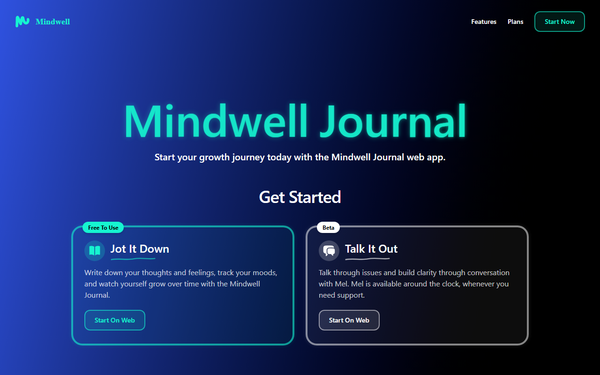
Key Features & Capabilities
Core functionality revolves around AI-driven therapeutic journaling with hundreds of guided prompts for socializing, self-reflection, action-taking, and conversational entries; mood tracking with cloud sync; media uploads (photos, voice memos); and direct chat sessions with the AI coach for personalized insights, thought reframing, and CBT-based exercises. Users can practice gratitude, identify cognitive distortions, apply anxiety-reduction techniques, and receive daily motivations or reminders.
Standout features include the CBT-trained AI coach for real-time conversational support that learns from user interactions, a minimalist design philosophy emphasizing intentional living, and science-backed elements like structured anxiety programs with exercises and progress tests (as noted in platform descriptions). These differentiate it from basic journaling apps by integrating evidence-based psychology directly into an engaging, adaptive experience.
Limitations include the absence of live human coaching or professional therapist integration, a reliance on user self-reporting for mood data, and standard disclaimers that it is not a substitute for medical or psychiatric care. Missing features noted across sources are advanced analytics for long-term trends (beyond basic tracking in free tiers) and multi-language support beyond primary English, with no confirmed WhatsApp integration despite some directory mislistings.
User Experience
The app boasts a low learning curve thanks to its intuitive, prompt-guided interface and distraction-free layouts that prioritize user thoughts. New users can quickly start a journal entry or chat session without prior training, making it suitable for beginners in mental wellness practices.
Interface quality is modern and minimalist, with customizable color themes, clean navigation, and seamless media integration for a polished mobile experience. Documentation is lightweight—primarily in-app tooltips, the website's terms/privacy sections, and email support at [email protected]—while resources like guided prompts serve as built-in tutorials. No extensive external help center exists, but the conversational AI itself provides on-demand guidance.
Performance & Reliability
As a native mobile app, MindwellAI delivers fast response times for AI conversations and prompt generation, with efficient cloud syncing for backups. Efficiency holds up well for daily use, handling media uploads and multi-session tracking without noticeable lag on standard devices.
No widespread known issues or common complaints appear in available sources (the app has insufficient ratings for aggregated reviews on the App Store), suggesting reliable performance for its current user base. Occasional minor bugs typical of newer apps (e.g., notification customizations) may occur, but nothing indicates systemic unreliability. Privacy handling is emphasized as secure and confidential.
Pricing & Value
MindwellAI follows a freemium model: the free tier includes basic mood tracking, starter prompts, limited cloud backup, and introductory AI testing. Paid plans escalate as Cloud ($4.99/month for extended sync and full prompts), AI ($11.99/month for extended conversations and insights), and AI Pro ($24.99/month for priority access and higher limits). In-app subscriptions are alternatively listed at $9 USD/month or $54 for six months, with auto-renewal and regional pricing variations.
The value proposition is strong for budget-conscious users seeking AI-enhanced CBT tools—far more affordable than weekly therapy sessions while offering 24/7 accessibility. Compared to alternatives like Woebot or basic journaling apps, it stands out for its integrated mood tracking and personalization depth at a competitive price, though full features require the higher tiers for heavy users.
Practical Tutorial
A common task is using the AI coach and journaling to address anxiety triggers (e.g., reframing worry about work). Here is a step-by-step walkthrough based on official features (no dedicated video tutorials found; visit https://mindwell.ai/ for app download and updates):
- Download the app from the Apple App Store (search "Mindwell: Self-Care AI-Coach") or compatible Android source and create a free account.
- On the home screen, select "Start Journaling" or tap the AI coach icon (Mel/Joy) to begin a session.
- Choose a guided prompt category like "Self-Reflection" or anxiety-specific (e.g., "What thoughts are causing my stress today?").
- Write or voice-record your entry; the AI will analyze it in real time, identify cognitive distortions (e.g., "catastrophizing"), and suggest CBT reframes like evidence-based counter-thoughts.
- Track your mood before/after via the built-in slider or scale, then explore related techniques such as breathing exercises or gratitude prompts.
- For deeper support, continue the conversation by asking follow-ups like "How can I apply this tomorrow?"—the AI provides personalized insights and saves progress to your cloud journal.
- Review weekly summaries in the app dashboard to monitor improvement.
This process typically takes 5–15 minutes daily and leverages the tool's anxiety-focused capabilities directly.
Final Verdict
Overall rating: 4/5. MindwellAI excels in delivering accessible, engaging self-care for users wanting consistent journaling and AI-guided CBT support to manage everyday anxiety and build emotional resilience—ideal for busy professionals, students, or anyone preferring private, on-demand tools over scheduling appointments. Avoid it if you require licensed professional therapy, prefer human interaction exclusively, or have severe mental health needs where disclaimers highlight its supportive (not curative) role. One-sentence recommendation: MindwellAI is a worthwhile investment for proactive mental wellness through thoughtful AI journaling, provided you view it as a helpful companion rather than a complete solution.