Orbofi Review: Create and Monetize AI Agents and Web3 Assets
Overview & Purpose

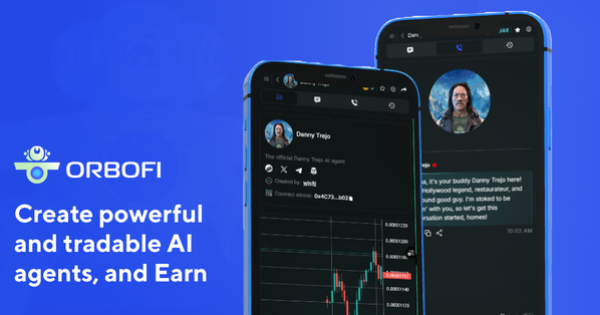
Orbofi is an AI-powered platform that enables users to create, customize, and tokenize AI-generated assets, factories, characters, and—more recently—fully autonomous AI agents and Agentic coins for web3, games, the metaverse, and online communities. At its core, the tool democratizes generative AI by letting users produce high-quality digital content (images, 3D models, game assets) via simple text prompts, fine-tune custom AI models into reusable “factories,” and mint them as NFTs or tradable on-chain assets on chains like Polygon, BNB Chain, and Base. Users can also upload their own AI-generated images or prompts and tokenize them for sale in crypto. The platform includes a sophisticated search engine across millions of existing assets and their original prompts, making it a hub for discovery and inspiration. Upcoming (or rebranded) features like Community Orbs were envisioned as metaverse spaces for collaborative creation with friends, followers, or brands, though current emphasis (as of April 2026) has shifted toward tokenized AI agents that operate autonomously with voice, skills, and economic utility.
Primary use cases include rapid prototyping of game assets for web3 developers, creating branded characters or companions for marketers and creators, building virtual factories for consistent style generation in design workflows, and launching monetizable AI agents that generate revenue through trading fees. The target audience spans web3 developers, game designers, digital artists, community managers, marketers, and crypto enthusiasts who want to blend AI creativity with blockchain ownership and economics. It appeals particularly to those in the metaverse and gaming sectors seeking to bridge traditional AI tools with on-chain monetization.
Key Features & Capabilities
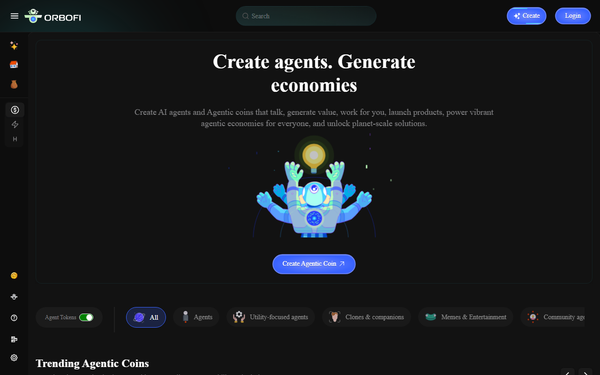
Core functionality revolves around prompt-to-asset generation, model fine-tuning (factories), asset tokenization, and now advanced AI agent creation. Users describe an asset, character, or agent in natural language, select styles or power-ups (skills, knowledge bases, voice), and generate multimodal outputs—including text, images, 3D, and even code-executable autonomous behaviors. Agents run 24/7 in a sandboxed environment with bash/code execution capabilities and can be turned into tradable “Agentic coins,” where creators earn a share of trading volume (approximately 0.4%). The search feature indexes over 15 million AI-generated assets with their prompts, using image similarity for intuitive discovery.
Standout differentiators include seamless web3 integration (tokenization on multiple chains without deep technical knowledge), the evolution into a full “agent factory” with 30,000+ skills and real-time on-chain intelligence, and the combination of content creation with built-in monetization via Agentic coins and platform fees. Unlike pure image generators (e.g., Midjourney) or NFT marketplaces, Orbofi packages AI outputs directly as ownable, tradable, and productive on-chain entities.
Limitations include a learning curve for blockchain aspects (wallet connection, gas fees), occasional inconsistencies in AI output quality (common to generative models), and the fact that some earlier features like dedicated Community Orbs appear de-emphasized or rebranded in the current agent-centric focus. Free-tier limits on compute credits (Orbox) can restrict heavy users, and advanced customization still benefits from technical familiarity.
User Experience
Orbofi offers an intuitive, prompt-first interface that keeps the learning curve low for creative tasks—most users can generate their first asset or agent in under 60 seconds. The dashboard is clean and modern, with clear sections for creation, search, marketplace, and agent management. Navigation feels web3-native yet accessible, with direct wallet integration for tokenization. Voice chat with agents and mobile-friendly design enhance engagement.
Documentation is solid via the official wiki (wiki.orbofi.com) and Medium posts, covering creation workflows, tokenomics, and troubleshooting. Support is primarily community-driven and form-based, with no live chat mentioned; however, the platform’s help resources and prompt examples reduce the need for extensive hand-holding. Overall, the UX prioritizes speed and creativity over complexity, making it approachable for non-technical creators while powerful enough for developers.
Performance & Reliability
Generation is fast—assets and agents typically appear in seconds to a minute, with efficient scaling for multimodal outputs. The sandboxed execution for autonomous agents ensures reliable 24/7 operation without user-side compute. Blockchain transactions for tokenization are straightforward on supported chains, though subject to network congestion.
Known issues are relatively minor and typical of AI/web3 tools: occasional image artifacts or prompt misinterpretations, variable output consistency across different models, and credit limits that can throttle heavy sessions on lower tiers. User feedback (though limited) notes no widespread outages or major reliability complaints as of 2026; the platform maintains strong uptime and has scaled to millions of assets and agents. Some early complaints around complex tokenization workflows have been addressed through simplified flows.
Pricing & Value
Orbofi operates on a subscription model with compute credits (Orbox) for generation and interactions. The Hobby plan starts at approximately $9.99/month (360 Orbox credits), suitable for casual users and light creators. The Pro plan is around $29/month (1,160 Orbox credits), offering higher limits and advanced features for serious developers or communities. Enterprise options exist for larger teams or high-volume needs (contact via site). Additional purchases of Orbox credits are available, and the native OBI token can be used for payments, subscriptions, and liquidity in the agentic economy. A small platform transaction fee applies alongside creator earnings from Agentic coin volume.
Value is strong for web3 creators: the ability to monetize immediately via NFT sales or trading fees, combined with a vast searchable library, provides clear ROI compared to standalone AI tools plus separate marketplaces. It undercuts competitors in integrated tokenization and agent autonomy, though users on tight budgets may find credit limits constraining without upgrading. Compared to alternatives like general AI generators or pure NFT platforms, Orbofi’s all-in-one web3 focus delivers superior utility for its niche.
Practical Tutorial
Official documentation and Medium guides provide walkthroughs; below is a practical, real-world step-by-step for a common task—creating and tokenizing a simple AI-generated game asset or agent (e.g., a “cyberpunk robot companion” character). This is based on current platform flows as of April 2026 and aligns with wiki/creator portal examples.
-
Sign Up and Access Creator Tools: Visit https://www.orbofi.com/, connect a compatible wallet (MetaMask recommended for Polygon/BNB), and navigate to the Create / Creator Portal section (or “Create Agent” for newer flows).
-
Enter Your Prompt: In the generation interface, type a detailed description, e.g., “A sleek cyberpunk robot companion character with neon glowing eyes, holographic armor, suitable for metaverse games, in a futuristic anime style.” Select any base model or style presets if available.
-
Customize Parameters: Choose output type (image/3D/asset or full agent), add power-ups (skills, personality, voice for agents), fine-tune for consistency (or use an existing factory style), and set category for discoverability (e.g., “gaming character”).
-
Generate and Review: Hit generate—results appear in seconds. Iterate with variations or image-to-image uploads if needed. Preview voice chat or autonomy features for agents.
-
Tokenize on Blockchain: Once satisfied, select “Tokenize” or “Create Agentic Coin/NFT.” Confirm details (name, description, supply if applicable), approve the transaction in your wallet, and pay any gas + Orbox credits. The asset deploys as an NFT or tradable coin on your chosen chain.
-
List, Share, or Sell: View your creation in the profile/marketplace. Share the prompt/asset link, list for sale in crypto, or embed in games/metaverse projects. For agents, enable trading and start earning volume fees.
For video demos or deeper guides, check Orbofi’s Medium articles (e.g., AI art to NFT tutorials) or the wiki at https://wiki.orbofi.com/learn. Always start small to stay within your plan’s credit limits.
Final Verdict
Orbofi earns a solid 8.5/10. It excels as an innovative bridge between generative AI and web3 economics, delivering fast, accessible creation tools with real monetization potential that few competitors match.
Who should use it: Web3 game developers, digital creators, community builders, and crypto enthusiasts looking to quickly prototype, tokenize, and monetize AI assets or autonomous agents without heavy coding or separate tools.
Who should avoid it: Beginners uncomfortable with wallets/crypto fees, users needing only non-blockchain AI generation (better served by Midjourney or Stable Diffusion), or those requiring enterprise-grade support and zero learning curve.
One-sentence recommendation: If you want to turn creative ideas into ownable, revenue-generating web3 assets or AI agents in minutes, Orbofi is one of the most compelling platforms available today.