Theo Review: Automate Brand Positioning and Market Research
Overview & Purpose

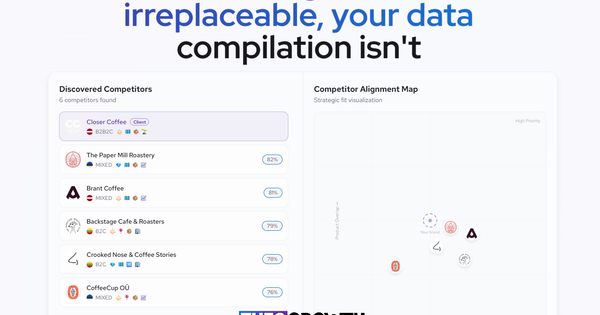
THEO (from theogrowth.com) is an AI-powered context management and positioning intelligence platform that transforms scattered business information—primarily websites, documents, decks, and related files—into structured, AI-ready briefs and competitive landscapes. It automates the heavy lifting of research and context engineering, delivering consistent, evidence-backed outputs that teams can query directly in tools like ChatGPT or Claude. The primary use cases include creating brand positioning briefs, preparing client pitches, supporting rebranding or repositioning efforts, planning product launches, and entering new markets. By mapping competitors, identifying positioning territories, risks, and opportunities from a brand’s perspective, it shifts users from 80% manual searching to focused strategic thinking.
The target audience is primarily brand strategists, marketing teams, and agencies (over 400 agencies reportedly use it to save 20+ hours monthly). While the tool benefits any professional who feeds business context into AI for pitches, insights, or campaigns, it is less geared toward pure developers or visual designers and shines for strategy-focused roles in consulting, agencies, or in-house marketing.
Key Features & Capabilities
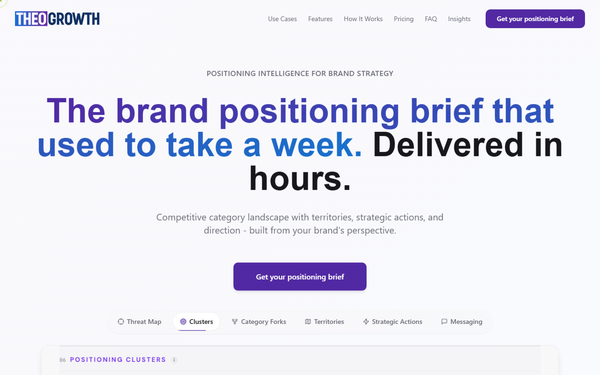
Core functionality revolves around ingesting a brand’s website URL (plus target region) or uploading relevant documents/files, automatically discovering and profiling competitors across 12 structured dimensions, scoring alignment, and outputting a comprehensive 10-section positioning brief. Key sections include Category Frame, Messaging Convergence, Positioning Territories, Strategic Observations, Positioning Risks, and a Positioning North Star. Outputs are transparent, with source attribution and the ability to dive deeper into underlying data.
Standout features include:
- Consistent depth—no shortcuts or hallucinations common in generic AI.
- Direct AI integration: paste the brief or use the upcoming MCP (Smart Intelligence) to chat with your project context in Claude/ChatGPT.
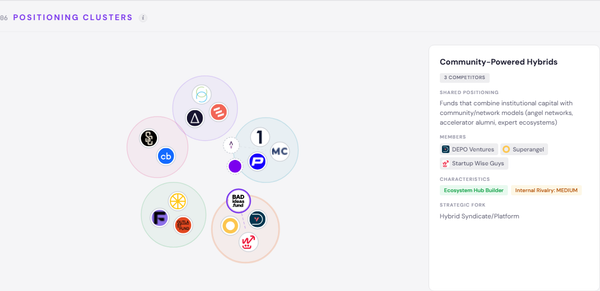
- Visual elements like threat maps, clusters, category forks, and positioning landscapes.
- “Business context engineering” that turns scattered client data into a reusable “digital twin” usable across any AI or automation platform.
Differentiators from competitors (e.g., manual research, custom GPTs, or generic summarizers) are the brand-specific positioning framework, evidence-backed transparency, and elimination of “context rot.” Upcoming MCP chat functionality will further differentiate it.
Limitations include a cap on document uploads (reportedly up to 5 docs in some descriptions), heavy reliance on public web data, and the fact that full multi-project chat (MCP) is still “coming soon” as of research. It does not appear to support real-time collaboration or private/internal systems beyond uploaded files. Transcripts are handled if provided as documents, but the tool is optimized for web + document inputs rather than video/audio ingestion.
User Experience
Setup is quick and requires no technical expertise—users simply share a URL or upload files via the app at app.theogrowth.com and receive results in hours rather than days. The learning curve is minimal; the interface is described as clean and focused, with clear steps and transparent drill-downs into insights. Public documentation is light (primarily an FAQ on the homepage covering reliability and use cases), but in-app guidance and the structured output itself serve as self-explanatory resources. Support appears to be handled via the app and standard channels; no extensive help center or video library was found.
Overall, the experience is praised for letting strategists skip repetitive desk research and jump straight to high-value thinking. The single testimonial on the site highlights transparency and speed.
Performance & Reliability
THEO consistently delivers full briefs in hours (versus 8–24+ hours of manual work), with real-world claims of 20+ hours saved per month for agency teams. Outputs are structured, repeatable, and include alignment scores and source links, reducing the “context rot” and iteration loops common when feeding raw data into AI. No major outages or widespread complaints surfaced in searches across Product Hunt, Reddit, or review aggregators; the platform’s zero-storage privacy policy (documents processed then immediately deleted, never used for training) adds reliability for sensitive client work.
Known issues are minimal and typical for an AI tool: occasional dependence on publicly available competitor data (non-obvious threats are a strength, but gaps can occur for very new or private brands). Independent user complaints are scarce, likely because the tool is still relatively new (launched 2024, with 2.0 updates).
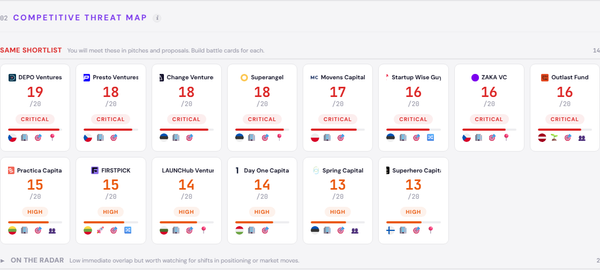
Pricing & Value
Pricing is project-based with no advertised free tier:
- Competitive Positioning Brief (you provide competitor URLs): €99 per project.
- Full discovery + brief (THEO finds competitors): €199 per project.
- MCP: Smart Intelligence (chat with projects): from €49/month (coming soon).
A 14-day money-back guarantee is mentioned in some listings. There are no monthly subscriptions for core briefs yet.
Value is strong for agencies and strategists who previously spent thousands or days on competitive research: one project often replaces 8–24 hours of work and improves AI output quality across tools. Compared to building custom GPTs or hiring analysts, THEO offers professional-grade structure at a fraction of the cost and time. For high-volume users, the per-project model may become expensive without the MCP tier; lighter users or those needing only occasional briefs will find excellent ROI.
Practical Tutorial
Official video or step-by-step tutorials are not publicly hosted, but the process is straightforward and documented on the site and in marketing materials. Here is a complete walkthrough for a common task—creating a positioning brief for a new client pitch (real example based on public reports like the Anthropic Global AI Assistant landscape or Medik8 skincare brief).
- Go to https://app.theogrowth.com/ and sign up/log in (quick email or Google flow).
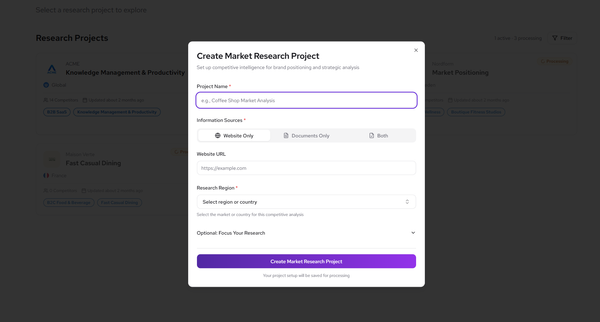
- Start a new project: Enter your brand’s website URL (e.g., medik8.com) and target region (e.g., UK). Optionally upload up to 5 supporting documents/decks/PDFs containing additional context (transcripts or internal notes work if text-based).
- Choose your package: Select “We Find Them” (€199) for automatic competitor discovery or provide competitor URLs yourself (€99).
- THEO processes: The platform systematically identifies competitors, profiles them across 12 dimensions, scores alignment, and maps territories. This typically completes in minutes to a few hours.
- Review the brief: Open the 10-section report (Category Frame, Messaging Convergence, Positioning Territories, Risks, North Star, etc.). Click any insight for source transparency and raw data.
- Export and use in AI: Download the structured brief (JSON, CSV, or PDF available). Paste relevant sections into ChatGPT/Claude with a prompt like “Using the attached THEO context, draft a pitch deck slide for [objective].” Or wait for MCP to enable direct project chat.
- Iterate: For follow-ups (rebranding or launch), start a new project or use the brief as reusable context.
Example output quality can be previewed at https://www.theogrowth.com/intelligence (public reports for brands like Anthropic or Circle K demonstrate the depth). The entire flow usually takes under 10 minutes of user time.
Final Verdict
Overall rating: 4.5/5. THEO excels at delivering professional-grade, AI-ready competitive intelligence and context engineering that actually works across tools—ideal for brand strategists, marketing teams, and agencies tired of inconsistent AI outputs or endless tab-switching.
Who should use it: Teams or individuals who regularly prepare pitches, positioning briefs, or client strategies and want to reclaim 5–20+ hours weekly while improving output quality.
Who should avoid it: Solo freelancers on tight budgets who need a free tier, developers building non-brand AI apps, or organizations requiring real-time collaboration and unlimited private data ingestion—better served by general document tools or custom solutions.
One-sentence recommendation: If you want reliable, structured brand context that makes every AI tool dramatically smarter without the manual grind, THEO is worth every euro.