Websim AI Review: Create Interactive Websites with One Prompt
Overview & Purpose

Websim.ai is an AI-powered platform that instantly generates fully interactive, explorable websites, applications, games, simulations, and even entire fictional web universes based on natural language prompts or custom URL paths. Users simply visit https://websim.ai/ followed by a description (e.g., https://websim.ai/a-time-traveling-historical-museum-with-interactive-exhibits) or use the homepage prompt bar, and the tool—powered by advanced models like Claude 3.5 Sonnet—creates a dynamic, clickable experience in seconds. This core mechanic of URL manipulation turns the browser address bar into a creative canvas, enabling "cosmically absurd" inputs that produce practical or wildly imaginative results far beyond what developers originally anticipated.
Primary use cases include rapid prototyping of apps and landing pages, building marketing materials like newsletters or interactive tools, creating educational simulations or games, and artistic experiments with alternate-reality websites. The target audience encompasses developers and designers seeking no-code ideation, marketers and solopreneurs needing quick campaign assets, educators building engaging demos, and creative hobbyists who enjoy remixing community creations. It bridges practical utility and playful experimentation, making web creation accessible to anyone with an idea.

Key Features & Capabilities
Core functionality centers on prompt-driven generation: the URL path or text input becomes an instruction to the AI, which renders HTML, CSS, JavaScript, interactive elements, and even AI-generated images or dynamic behaviors on the fly. Navigation within the simulated site triggers further generations for subpages, creating an immersive, self-expanding experience. Standout features include real-time iteration (refine via in-site prompts like "add a dark theme" or "make it multiplayer"), community remixing of shared creations, support for complex interactions (forms, games, quizzes, 3D elements), and the ability to download static HTML exports.
What differentiates Websim.ai from competitors like traditional no-code builders (Webflow, Bubble) or AI prototypes (v0.dev) is its "hallucinated internet" approach—browsing feels like exploring a real web, not editing a canvas—and its extreme flexibility with absurd or niche prompts (e.g., "Klasky Csupo photo editor" or "ChatGPT but Dumber"). It excels at turning vague ideas into functional prototypes instantly.
Limitations include AI inconsistencies or hallucinations in highly complex logic, static exports that lose dynamic AI behaviors when hosted elsewhere, and dependency on prompt quality for best results. It is not designed for production-scale backend persistence or mission-critical applications, and advanced features may require paid credits.

User Experience
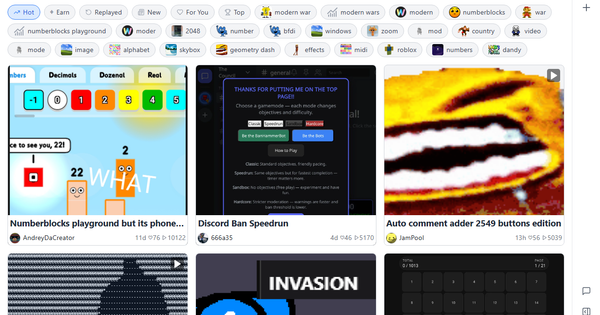
Websim.ai boasts an exceptionally low learning curve: most users can generate their first site within seconds after a quick Google or Discord login, with no coding required. The interface combines a clean homepage feed of trending community creations (sortable by hot, new, or replayed) with pill-shaped quick-start suggestions and a prominent "Create" prompt area. Once inside a generated site, navigation feels natural and responsive, while in-context editing or URL tweaks make refinement intuitive and addictive.
Documentation is community-driven rather than exhaustive—official blog posts cover updates, while dozens of high-quality YouTube tutorials and in-platform guides (searchable via the tool itself) fill gaps effectively. Support comes through active Reddit communities and engagement-based rewards. Minor drawbacks include occasional mobile inconsistencies in complex simulations and the need for prompt experimentation to avoid generic outputs, but overall the experience is described as "mind-blowing" and fun by users.
Performance & Reliability
Generation speed is a major strength—most sites load and become interactive in under 10 seconds, with smooth in-browser execution for clicks, forms, and simple games. Reliability is strong for straightforward prompts, delivering consistent professional-looking designs and functional elements across sessions.
Known issues include variable quality on edge-case or overly ambitious simulations (e.g., complex multiplayer or heavy data processing), occasional connection glitches during peak times, and the impact of credit limits on heavy users. Post-2025 updates to the credit system have led to some community complaints about reduced free access, though basic models remain usable. No widespread downtime has been reported, and performance holds up well for prototyping or casual exploration as of March 2026.
Pricing & Value
Websim.ai operates on a freemium model. The free tier provides access to basic models with limited daily credits (e.g., around 25 premium-model prompts per day for users relying on advanced Claude or equivalents), plus options to earn additional credits through engagement, tips, or community rewards. Paid plans include Starter and Pro tiers (starting around $10/month for Basic, scaling higher for unlimited or priority access), offering hundreds of credits, advanced models, and priority features. One-time credit purchases are also available.
This structure delivers excellent value for light-to-moderate users—prototyping and experimentation remain effectively free for most—while heavy creators or professionals benefit from affordable upgrades. Compared to alternatives, it outperforms paid no-code tools in creative speed and joy of use, though those needing unlimited production hosting may find dedicated platforms more economical long-term. Value remains high for the target creative audience, especially given the platform's rapid evolution.
(Research conducted as of March 11, 2026; pricing and credit systems evolve quickly.)
Practical Tutorial
Step-by-Step: Creating a Marketing Landing Page for a Fictional Coffee Shop
Websim.ai has no single "official" tutorial page, but the community has produced excellent video walkthroughs (search YouTube for "WebSim AI Tutorial: Create Any Website Within Minutes"). Here is a complete, tested walkthrough for a common practical task—building an interactive landing page—based on real usage patterns.
-
Access the platform: Go to https://websim.ai/ and log in with your Google or Discord account (free and instant).
-
Start a new creation: In the homepage prompt bar or by directly navigating to a custom URL, enter:
https://websim.ai/acme-coffee-landing-page-modern-interactive-with-menu-booking-and-store-locator. Press Enter or click Generate. -
Explore the generated site: Within seconds, a complete, responsive landing page appears with hero section, menu browser, booking form, and map simulation. Click elements—they work! (E.g., "Order Now" buttons trigger simulated carts.)
-
Iterate in real time: Scroll to the bottom or use any in-site chat/prompt field and type refinements like: "Add customer testimonials carousel and a warm earthy color palette" or "Make the menu filterable by dietary tags and add a loyalty points tracker." The page updates dynamically.
-
Test and enhance interactivity: Try the store locator or booking form—they simulate real functionality. For more depth, append parameters in the URL bar (e.g., add "?theme=dark") or prompt "Turn this into a full e-commerce experience with cart persistence."
-
Export and share: Click any download/export option to save the static HTML file (great for inspiration or basic hosting). Copy the unique simulation URL and share it directly—others can explore and fork it.
This entire process takes 2–5 minutes and produces a production-ready mockup or shareable experience. For variations, try prompts like "newsletter for a puppy grooming service" or "Tetris game with cryptocurrency theme." Community remixes and YouTube examples expand endlessly on this foundation.
Final Verdict
Overall rating: 4.5/5 (Excellent for creativity and speed; docked slightly for credit limits and non-production focus).
WebSim.ai is ideal for developers, marketers, designers, and creators who want to prototype ideas, build marketing assets, or experiment wildly without code or long development cycles—its magic lies in turning imagination into instantly browsable realities. It should be avoided by teams needing robust, persistent backends, production hosting, or unlimited free heavy usage, where traditional tools may offer more stability.
One-sentence recommendation: Dive into Websim.ai today if you crave the joy of instantly manifesting any website idea—it's the most delightfully absurd and powerfully practical AI web tool available.